At Worcester, you’ll enjoy flexible one-day-a-week study, expert teaching and scenario-based learning through case studies and guest speakers, giving you the confidence and skills to make a real difference.
Overview
This one-year top-up degree is designed for students who already hold a Higher National Diploma (HND), Foundation Degree, or equivalent qualification in health, care, welfare, or a related subject. By completing this course, you’ll graduate with an honours-level degree, enhancing your career prospects in any setting where the mental health and well-being of children, young people and their families is a priority.
Our course is one of the few third-year undergraduate programmes in the UK dedicated specifically to child and adolescent mental health. Delivered full-time over one day per week, the course is designed to fit around your existing commitments. There is no requirement for placement or work-based learning, making it accessible for those already working or balancing other responsibilities.
Throughout the course, you’ll engage with guest speakers from a range of child and adolescent mental health specialisms, gaining insight into current practice and emerging trends. You’ll explore the origins of mental health problems in children and adolescents, considering social and cultural factors such as risk, vulnerability and resilience. You’ll also develop practical knowledge and skills in applying therapeutic principles when working with children, young people and their families, with a strong emphasis on approaches suitable for a variety of settings and contexts.
Whether you aspire to work in education, early years, health and social care, social work, or child mental health services, this course will prepare you for a wide range of roles supporting children and young people. By the time you graduate, you’ll be equipped with the knowledge and confidence, and adaptability to make a positive impact on the lives of children and families.
Course content
Through timetabled lectures, seminars and independent study; you’ll explore many areas of child and adolescent mental health. Optional modules and projects will help you focus on your specialist interests throughout the course.
We regularly review our courses to reflect the latest research and developments in the subject area, as well as feedback from students, employers and the wider sector. As a result, modules may change to ensure the course remains current and relevant.
Optional modules will run if enough students choose to study them. It is not guaranteed that all modules will be offered every year.
Optional modules
Careers
Our child and adolescent mental health course offers excellent graduate prospects in services that support the mental health and well-being of young people.
Throughout your degree, you’ll benefit from career-focused opportunities designed to prepare you for success. You’ll hear from guest speakers across a range of children’s mental health specialisms, gain insights that inform your practice and develop skills through work-based scenarios, case studies and practical assignments that strengthen your communication and professional confidence.
You’ll also have access to our Careers and Employability Service, which provides tailored support throughout your studies, from CV workshops and interview preparation to job search advice, helping you take confident steps toward your chosen career.
This course could be your next step towards a career as a:
- Child and adolescent mental health practitioner
- Mental health support worker
- Family support worker
- Youth worker
- Education mental health practitioner
- Domestic abuse support specialist
- Substance misuse support worker
- Children’s rights advocate
Opportunities to progress
You may wish to take your learning further and progress onto postgraduate study. Relevant postgraduate degrees at Worcester include:
Student success
Explore what our students have accomplished through this course.

Ruby Merrell
“Being able to say I have achieved a First Class Honours Degree still makes me beam from ear to ear,” said the 27-year-old. “I can’t quite believe it is mine, but it is definitely one of my proudest achievements alongside having my little boy!”
Ruby, of Worcester, had been working in the local Perinatal Mental Health Team as a peer support worker and since finishing her degree has secured a job in Child and Adolescent Mental Health Services.

Kimberley Brown
Kimberley Brown achieved a First-Class Honours degree in Child and Adolescent Mental Health and said she chose the course because it was highly respected. She said, "I never thought in my wildest dreams I would achieve a First-Class degree."
Kimberley started a new job at a primary school in September. “I have learnt so much from the children already. I am really enjoying it and no day is the same,” she said.
Ruby Merrell
“Being able to say I have achieved a First Class Honours Degree still makes me beam from ear to ear,” said the 27-year-old. “I can’t quite believe it is mine, but it is definitely one of my proudest achievements alongside having my little boy!”
Ruby, of Worcester, had been working in the local Perinatal Mental Health Team as a peer support worker and since finishing her degree has secured a job in Child and Adolescent Mental Health Services.
Kimberley Brown
Kimberley Brown achieved a First-Class Honours degree in Child and Adolescent Mental Health and said she chose the course because it was highly respected. She said, "I never thought in my wildest dreams I would achieve a First-Class degree."
Kimberley started a new job at a primary school in September. “I have learnt so much from the children already. I am really enjoying it and no day is the same,” she said.
Course highlights



Teaching and assessment
Through a combination of independent study, engaging teaching, and personalised support from our academics, you’ll have the opportunity to reflect on your progress and develop a strong portfolio of skills, achievements, and experiences that will empower you to thrive and develop your career in psychology.
Teaching and assessment contents
Most teaching sessions are face to face on campus. A blended learning approach will be taken. Lectures or lecture workshops for some modules will be delivered online either ‘live’ or pre-recorded. Individual and small group tutorials will be arranged online or face to face. Your Dissertation, will be taught online as per recent changes to the module specification.
The principles of inclusive, Universal Design for Learning (UDL) underpin our commitment to offer flexible ways of learning. This includes innovative teaching methods; flexible study resources, electronic teaching materials so you can modify the font and background colour; and flexible ways of assessing learning.
Examples of learning, teaching and assessment methods used:
- A programme of structured lectures, interactive seminars, group work sessions, individual tutorials and Virtual Learning Environment (VLE) support
- The planning, researching and writing of assignments and subsequent oral and written feedback is fully supported by the use of formative [preparatory] assessment
- Work-based scenarios and case studies from CAMHS and universal settings.
- Practical, experiential assignments – e.g., Video and practice of communication and interpersonal skills and group work, intervention plans, case studies, health promotion posters
- Use of VLE to encourage discussion, shared learning and development and assessment of attitudes and values
- A variety of assessment strategies including essays, oral presentations, reports, group work, critiques, evidencing practice and research-related tasks
- The dissertation requires students to select, research and relate theory to a CAMH-based topic or issue
- All modules encourage learners to engage in discussion and application of key concepts to a work-based context
- Higher order independent learning and critical skills at level 6 (with additional tutor support inline with UW’s Intended Learning Outcomes policy).
- Reflection and case study work offers students the opportunity to engage in problem solving and decision making and demonstrate awareness of own strengths, limitations, responsibility and accountability
- Evidence-based research informed knowledge, understanding and critical appreciation is assessed throughout modules
- Practical, experiential, role play and group work sessions to develop assessment, communication and interpersonal skills
- Use of case studies
- Reflective papers and summaries on self-development of knowledge, skills and attributes.
- Subject librarian contributes to study skills sessions on accessing and searching for information sources, using databases and Web-based sources
- All modules are focussed on learning for professional practice and include opportunities for group discussions and sharing experiences. Some modules include group assessments.
- Development of skills for critical reflection throughout the course and additionally through assignments in a number of modules• Opportunities in modules and additional support sessions to develop skills in using PowerPoint, word processing, e-mailing, Excel
- Completion of a range of different assessment items throughout the course to develop written, oral and other communication skills.
In addition, meetings with Personal Academic Tutors are scheduled on at least three occasions within the year.
Entry requirements
A Foundation degree, DipHE, HND or equivalent qualification in health, care or welfare or related subject. This qualification must be a full level 4 and level 5 qualification (120 credits for each year of study).
Any questions?
If you have any questions about entry requirements, please call our Admissions Office on 01905 855111 or email admissions@worc.ac.uk.
Fees
Fees contents
UK and EU students
The standard fee for full-time home and EU undergraduate students on BA/BSc/LLB degrees and FdA/FdSc degrees in the academic year 2027/28 is £10,050 per year.
Tuition fees are reviewed annually and may increase each year for both new and continuing students.
For more details on course fees, please visit our course fees page.
International students
The standard tuition fee for full-time international students enrolling on BA/BSc/LLB degrees and FdA/FdSc degrees in the academic year 2027/28 is £17,700 per year.
Tuition fees are reviewed annually and may increase each year for both new and continuing students.
For more details on course fees, please visit our course fees page.
How to apply
How to apply contents
Applying through UCAS
UCAS is the central organisation through which applications are processed for full-time undergraduate courses in the UK.
Read our how to apply pages for more information on the application process, or if you’d like to apply for part-time study.
Contact
If you have any questions, please get in touch. We're here to help you every step of the way.
Admissions Office
admissions@worc.ac.uk01905 855111More to explore
Open Days
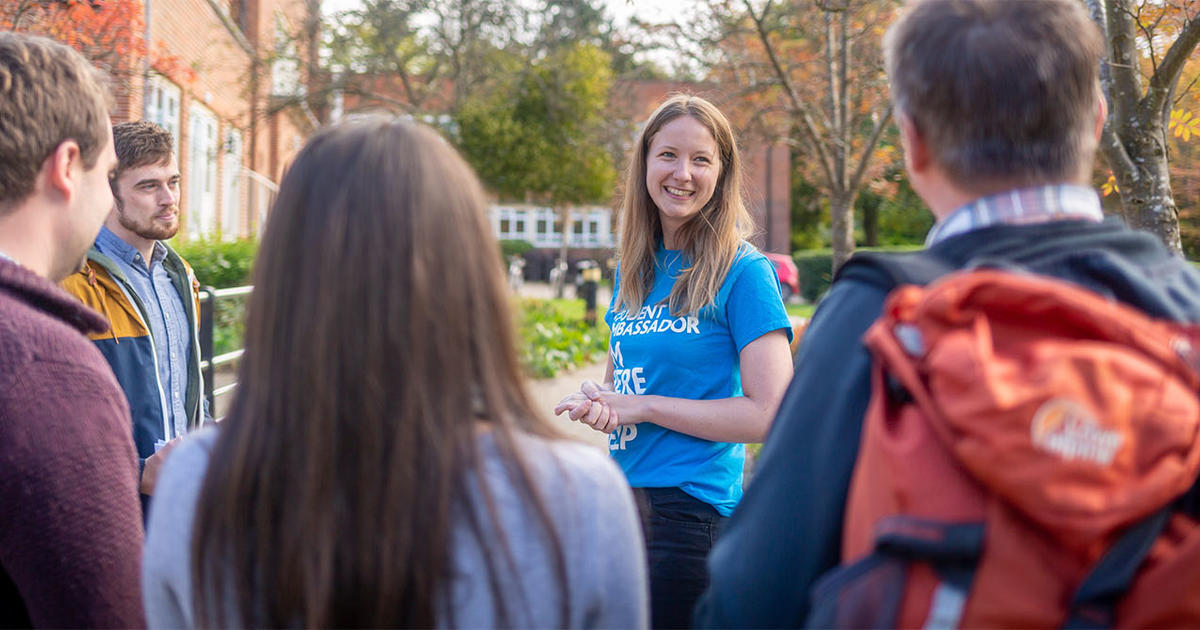
Visiting us is the best way to get a feel for student life at the University of Worcester.
The City of Worcester
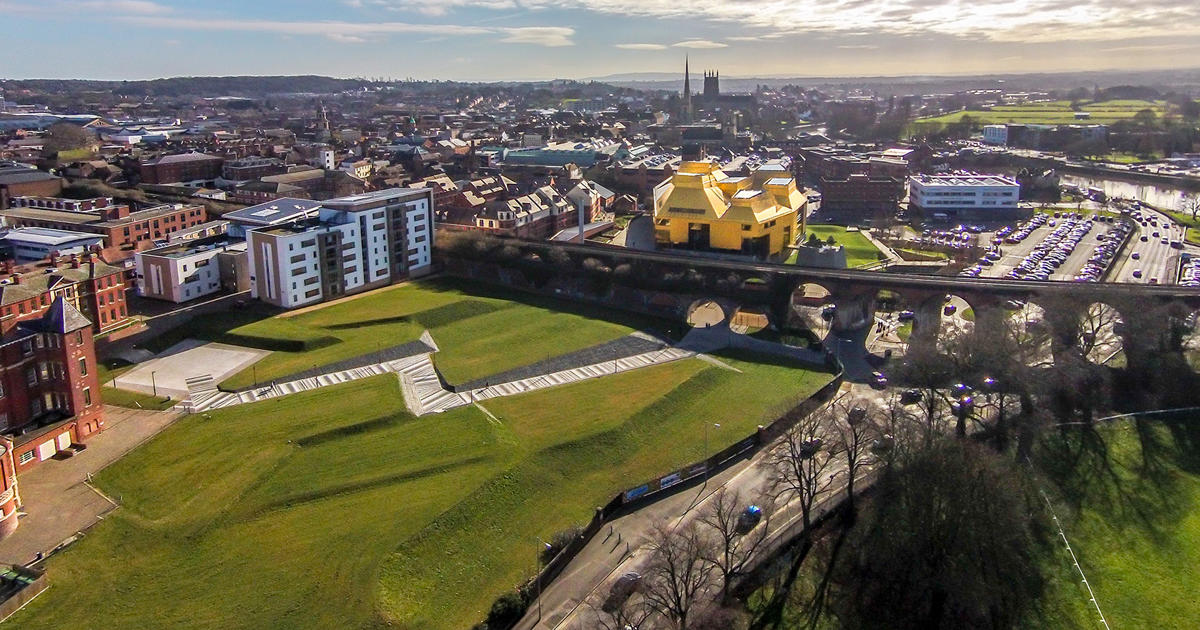
Worcester is a welcoming university city with great transport links and plenty of student parking.
Accommodation
Benefit from our accommodation guarantee. We have rooms on campus to suit every budget including en-suite options.