
At Worcester, you'll learn from industry professionals, guest speakers with real‑world experience and individuals with lived experience of the justice system. This combination will equip you with knowledge and practical skills needed to make a meaningful impact in your chosen career.
for Psychology and health assessment and feedback
for Criminology teaching quality
Clearing 2026
Apply now to start this September. Check course availability, find out how to secure your place and take advantage of our accommodation guarantee on our Clearing webpages or by calling 01905 544433.
Overview
Studying Criminology and Psychology together helps you explore why people break the law and how society responds when they do. You’ll examine the psychological factors that shape behaviour as well as the wider social issues that influence crime, safety, and justice in communities. This combined approach gives you a well‑rounded understanding of how personal experiences and social environments interact to shape actions and decisions.
You'll begin by studying key ideas from both disciplines before choosing optional modules that match your interests, such as forensic practice, social inequalities, policing, law, or mental health. Teaching is delivered through discussions, group activities, and hands‑on learning. Assessments mirror real‑world tasks, including case studies, presentations, and problem‑solving projects.
To broaden your experience, you’ll have opportunities to attend guest lectures, research events and workshops. You may also visit courts and prisons, to see how the justice system operates in practice. Guest speakers, ranging from professionals working within the justice system to individuals with lived experience of crime, offer valuable insight into the challenges and realities of the field.
As you progress through the degree, you will deepen your understanding of behaviour and crime and complete your own research project in your final year. You will also develop practical skills such as critical thinking, ethical decision‑making, teamwork and communication, preparing you for roles that support people and communities both within and beyond the justice system.
Placements
Our supportive team has strong connections with organisations across the NHS and the private sector, ensuring that what you learn is current and relevant to real working environments.
During your studies, you will have the opportunity to undertake either a Psychology or a Criminology placement, giving you hands-on experience and the chance to apply your academic learning in a professional setting.
We also work closely with the Careers and Employability team to help arrange both paid and voluntary placements with a wide range of local and national employers. These include the NHS, West Mercia Police, Hereford & Worcester Fire and Rescue Service, Worcestershire County Council, the British Psychological Society and HMP Aylesbury.
Course content
You'll examine how psychological processes, social influences and legal systems shape criminal behaviour. In your second and third years, you can tailor your studies by choosing from a broad range of optional modules to suit your interests.
We regularly review our courses to reflect the latest research and developments in the subject area, as well as feedback from students, employers and the wider sector. As a result, modules may change to ensure the course remains current and relevant.
Optional modules will run if enough students choose to study them. It is not guaranteed that all modules will be offered every year.
Optional modules
Careers
You’ll gain valuable hands-on experience via placements and practical projects and have opportunities to meet professionals working in the field. Guest speakers from the police, prison and probation services regularly visit and employers from across the country attend our Criminology Careers Fair, ensuring you graduate with real-world insights and a competitive edge.
You'll also have access to practical workshops covering CV writing, interview techniques and recruitment processes. Throughout the course, you’ll meet guest speakers, visit potential employers and receive personalised support when applying for jobs or postgraduate study.
This degree is designed to equip you with the analytical, research and communication skills which are highly valued across the criminal justice system, non-profit organisation and beyond.
This degree could be the first step toward your career as a:
- Probation Officer
- Rehabilitation Worker
- Youth Offending Officer
- Assistant Psychologist
- Safeguarding Officer
- Social Care Practitioner
- Criminal Justice Researcher
Opportunities to progress
At Worcester you can also specialise further with our Applied Criminology MA or one of our postgraduate psychology courses. You also can train to teach with a one-year Primary or Secondary PGCE at Worcester.
Course highlights


Teaching and assessment
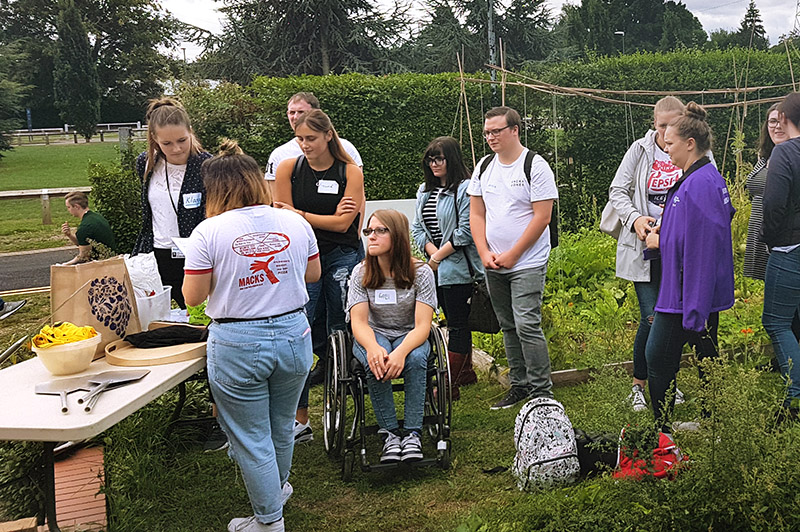
Teaching will be delivered through a combination of guided lectures, independent study and one-to-one tutoring sessions.
You'll experience a wide range of assessments including essays, reviews, portfolios, case studies, research projects, presentations and reflective tasks.
Teaching and assessment contents
You will learn through a mix of lectures, seminars, practical workshops, computer lab sessions, and experiential learning activities that help you understand key criminology and psychology concepts while applying theory to real-world situations.
Lectures introduce you to core ideas using both traditional and contemporary examples, with seminars providing opportunities to discuss and deepen your understanding. Practical classes focus on developing subject-specific and practitioner-based skills, and problem-based learning tasks encourage you to apply criminological theory to issues such as policing and victimology.
Research-informed teaching shapes group work, assessments, and applied activities across the course, while a specialised work-based learning module allows you to build confidence through employability-focused experiences.
You will also develop independent learning skills supported by academic services and the Personal Academic Tutoring system.
Meet the team
Find out more about the expertise and specialist areas of several of the lecturers on this course.

Dr Jack Brimmell
Jack has previously worked with elite sporting organisations (i.e., the Premier League, the RFU and professional Women’s football teams) to try and use sport psychology to enhance performance. Jack is published in a number of top level sport psychology journals and is also reviewing work for these journals.
He is predominately interested in how feelings of anxiety and stress can disrupt attentional control and perceptual-cognition during pressurised sport performance.

Dr Daniel Farrelly
Daniel is a principal lecturer in psychology. He obtained his BSc (hons) in psychology from Liverpool University in 1999, followed by an MSc in evolutionary psychology from Liverpool University in 2000. He gained his PhD in Psychology, studying the evolution of human cooperation, from Newcastle University in 2005. Previously, he has held research positions at Plymouth, Newcastle and Edinburgh Universities, and a lectureship at Sunderland University before joining Worcester as a senior lecturer in 2014.

Dr Isabel Gilbert
Isabel has a background in the heritage sector and has specialised in the relationship between interpretations of history and racism in contemporary society. She brings her knowledge of societal inequality, social justice, symbolism, politics and ideology, and the influence of popular culture to the subject of Criminology.
Isabel enjoys researching cultural conflict, social justice movements, reactionary politics and legacies of colonialism.

Amy Johnson
Amy is a Senior Lecturer in Criminology at the University of Worcester, where she manages and oversees all undergraduate and postgraduate criminology programmes. Amy has worked with a wide range of client groups across criminal justice and support services, bringing a person-centred, empathetic approach to both practice and pedagogy.
Dr Jack Brimmell
Jack has previously worked with elite sporting organisations (i.e., the Premier League, the RFU and professional Women’s football teams) to try and use sport psychology to enhance performance. Jack is published in a number of top level sport psychology journals and is also reviewing work for these journals.
He is predominately interested in how feelings of anxiety and stress can disrupt attentional control and perceptual-cognition during pressurised sport performance.
Dr Daniel Farrelly
Daniel is a principal lecturer in psychology. He obtained his BSc (hons) in psychology from Liverpool University in 1999, followed by an MSc in evolutionary psychology from Liverpool University in 2000. He gained his PhD in Psychology, studying the evolution of human cooperation, from Newcastle University in 2005. Previously, he has held research positions at Plymouth, Newcastle and Edinburgh Universities, and a lectureship at Sunderland University before joining Worcester as a senior lecturer in 2014.
Entry requirements
UCAS tariff points required: 112
| Qualification | Grade |
|---|---|
| A-level | BBC |
| BTEC National Extended Diploma | DMM |
| T-level | Merit |
We do accept Access to HE Diplomas and other qualifications which may not exactly match the combinations above. Work out your estimated points with the UCAS tariff calculator.
Any questions?
If you have any questions about entry requirements, please call our Admissions Office on 01905 855111 or email admissions@worc.ac.uk.
Fees
Fees contents
UK and EU students
In 2026/27 the standard fee for full-time home and EU undergraduate students on BA/BSc/LLB degrees and FdA/FdSc degrees is £9,790 per year.
Tuition fees are reviewed annually and may increase each year for both new and continuing students.
For more details on course fees, please visit our course fees page.
International students
In 2026/27 the standard tuition fee for full-time international students enrolling on BA/BSc/LLB degrees and FdA/FdSc degrees is £17,200 per year.
Tuition fees are reviewed annually and may increase each year for both new and continuing students.
For more details on course fees, please visit our course fees page.
How to apply
How to apply contents
Applying through UCAS
UCAS is the central organisation through which applications are processed for full-time undergraduate courses in the UK.
Read our how to apply pages for more information on the application process, or if you’d like to apply for part-time study.
Criminology and Psychology BA/BSc (Hons) - L3C8
Contact
If you have any questions, please get in touch. We're here to help you every step of the way.
Admissions Office
admissions@worc.ac.uk01905 855111More to explore
Open Days
Visiting us is the best way to get a feel for student life at the University of Worcester.
The City of Worcester
Worcester is a welcoming university city with great transport links and plenty of student parking.

Accommodation
Benefit from our accommodation guarantee. We have rooms on campus to suit every budget including en-suite options.