Why Wetlands Matter
Last year, Professor Alan Dixon co-edited The Routledge Handbook of Wetlands, with Honorary Professor Ian Maddock. With contributions from global experts, including Worcester colleagues Dr John Dutton and Josie Lynch, the book is essential reading for anyone passionate about wetlands, from practitioners and policymakers to students and researchers.
World Wetlands Day
Every year on February 2, World Wetlands Day reminds us of the critical role wetlands play in sustaining life on Earth. Far from being wastelands, wetlands are among the planet’s most productive ecosystems, yet they are disappearing at an alarming rate. Studies show that 64% of the world’s wetlands have vanished since 1900, and compared to 1700, that figure rises to 87%.
Wetlands provide fresh water, food, and livelihoods for millions of people. They act as nature’s shock absorbers, reducing floods and droughts, and they store vast amounts of carbon -peatlands alone hold 30% of all land-based carbon, twice as much as the world’s forests.
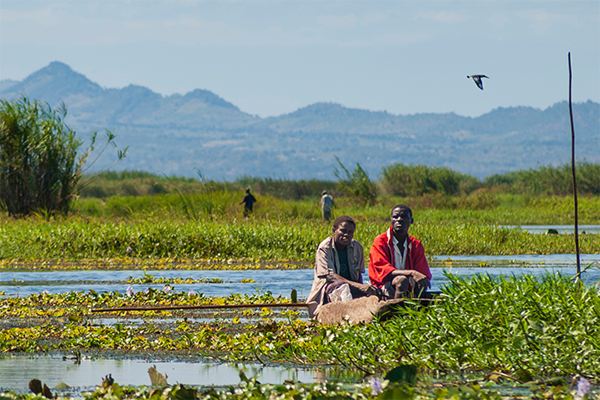
They also support biodiversity and ecosystem services that underpin human wellbeing.
The Ramsar Convention, an intergovernmental treaty, which came in to force in 1975, calls wetlands essential for biodiversity, water security, and sustainable development. The treaty provides a framework for the conservation and use of wetlands and their resources.
But protecting them requires more than policy - it demands knowledge, innovation, and collaboration.
At the University of Worcester, our researchers are at the forefront of exploring how wetlands can be managed sustainably for future generations. Working both in the UK and in Africa, our academics have spent decades working with local communities to develop sustainable use of wetlands.

Professor Alan Dixon has helped develop global guidelines on wetland-agriculture interactions and has worked with NGOs like Self Help Africa and Wetland Action to bolster both ecosystem health and community resilience.
The handbook goes beyond ecology. It explores wetlands as dynamic systems delivering benefits for both nature and society - carbon storage, flood mitigation, clean water, food security, and cultural services.
It introduces innovative approaches for safeguarding these ecosystems amid climate change and human pressures, making it a vital resource for shaping sustainable futures.
Explore The Routledge Handbook of Wetlands.
If you’re interested in learning more about wetlands, take a look at the University’s Geography programme.
If you’d like to read more about our recent wetlands research in northern Malawi click here.
Professor Alan Dixon is Professor of Sustainable Development and teaches on our BSc Geography and BSc Environmental Management and Sustainability courses.