A mother of two who once believed she ‘wasn’t good enough’ for university is now graduating with a PhD that explores how to empower silenced learners.
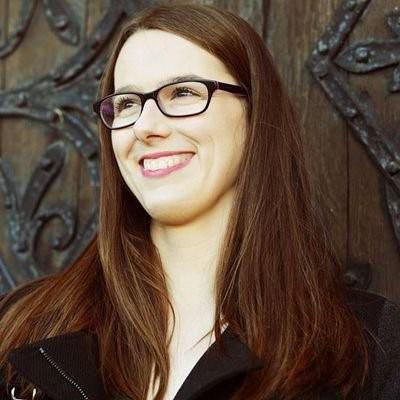
Anastasia Kennett studied for her undergraduate degree in Special Educational Disabilities at the University of Worcester before embarking on a PhD exploring ‘silencing’ in learning environments, and how people with diversities can find themselves without a voice in education.
She was diagnosed with dyslexia at 17, and later with dyspraxia while studying for her undergraduate degree at Worcester. More recently, she also received a diagnosis of ADHD.
“I left school with no C grades,” she said. “I struggled throughout school, always being wrong, not feeling like I was good enough, and not passing my GCSEs.”
With perseverance, Anastasia passed her GCSEs while at college but still felt convinced she wasn’t academic enough to make it at university.
“I don’t think the world realises just how hard people try when they’re diverse; not just to talk in classes, but to pass an exam, or an assignment.”
Anastasia’s PhD examined how ‘silencing’ happens in education; where diverse students can lose their voice through fear, judgement, or masking, and how universities can create safer, more inclusive environments that help them speak up.
“Silencing usually happens in childhood, in the home environment or at school,” she said. “It’s usually a fear that they’re going to get told off, or that someone will be angry with them, so they develop coping strategies of silencing. By the time they arrive at college or university, they’re effectively silent in the classroom.”
Alongside her studies, Anastasia has also been lecturing at the University of Worcester, drawing on her own experiences to support students in the classroom.
Anastasia’s research explored how diverse students can begin to regain their voice by healing the fear created in childhood and developing the confidence to express themselves without worrying about judgement.
She said her research found that students want staff to be genuine with them and accept them without judgement: “We need trauma‑informed practice in an environment where students feel safe. It’s about humanising those in powerful positions so students can connect without fear.”
Anastasia said her own experiences of silencing helped her build deep connections with the students who took part in the research and with the students she has been teaching.
“I lost my voice,” she said. “I had trouble communicating.” She believes that shared experience enabled participants to open up in ways they might not have otherwise. “I’m with them, I’ve experienced what they’ve experienced, and many said they felt so much better after talking to me!”
She added: “It improves your voice when you’re talking to someone who has similar experiences. As a lecturer myself, I humanise myself, and I let my students know that I’m dyslexic or that I have ADHD; it helps people relate to me.”
Anastasia also paid tribute to the people who helped her reach this milestone. “I want to thank my supervisors for helping me achieve this; their support has been immeasurable and so kind,” she said. “And I want to thank my children, Tyler and Rory, for the sacrifices they have made to enable me to complete my studies.”
Anastasia said the reality of becoming Dr Kennett still hasn’t sunk in.
“I don’t think I quite accept it,” she said. “I’m not sure the world realises just how hard people try when they’re diverse, and how resilient they have to be. We lose a lot of people from education because of it, and I just want people to know they must keep going, keep persevering, and remember that there is a space for you in universities.”
For information on courses at University of Worcester visit www.worcester.ac.uk or for application enquiries telephone 01905 855111 or email admissions@worc.ac.uk