The University of Worcester has held an event to celebrate and launch a new research unit, that will deliver a five-year programme focussed on tackling rural mental health inequalities across Herefordshire and Worcestershire.
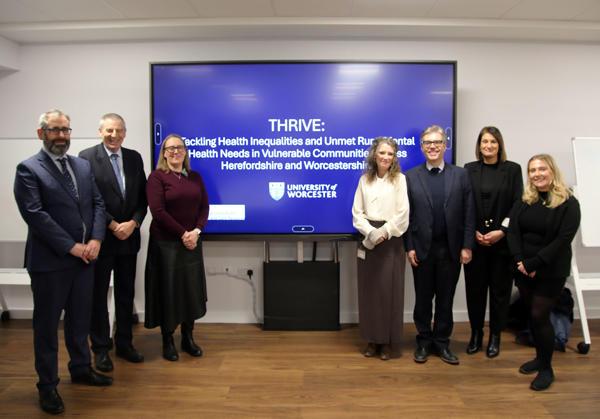
The THRIVE programme has been made possible by £2.2 million in funding from the National Institute of Health Research, which has enabled the recruitment of a dedicated research team to work with health and social care providers and local communities to improve mental health support in rural areas.
Serious mental illnesses such as schizophrenia, bipolar disorder, and major depression can make everyday life extremely challenging, and rates are rising, particularly in rural regions experiencing high levels of poverty.
In these communities, mental health needs often go unmet due to stigma, social isolation, and limited access to services. People often face long journeys to reach support and may struggle to use digital alternatives.
The programme will concentrate on early intervention, suicide prevention, and digital innovation to improve the delivery of mental health service.
There’ll also be interlinked initiatives to build research capacity in the region, increase involvement in mental health research and develop opportunities for people with lived experiences to be more involved in the development and delivery of research projects.
At a packed launch event in the newly opened Duke’s Building at the University of Worcester’s Severn Campus, attendees, representing a range of local NHS and social care, mental health services, voluntary sector groups and charities, mental health researchers and people with lived experience, heard from the University’s Vice Chancellor, leading experts in mental health, and the newly appointed team who’ll be carrying the work forward.
Elizabeth Hughes, Professor of Mental Health Inequalities and Lead for the Rural Mental Health Research Unit, said: “I was simply blown away by the energy and enthusiasm at the launch for this programme of work.”
She added: “I am delighted to be appointed to lead this work, and be part of something that has potential to make a real difference to the lives of people who live in rural and remote areas.”
Professor Eleanor Bradley, Director of Research and Knowledge Exchange at the University of Worcester and Principal Investigator on the THRIVE programme, said: “It was fantastic to see so many of our regional stakeholders at this launch.”
She added: “The development of this important programme has only been possible through these collaborative relationships. We value our close working relationships between the University and our local communities, and the THRIVE programme is a great example of how these relationships can inform and strengthen our research.”
To read more about the THRIVE programme of research, visit the University of Worcester’s website.