Mature students
21 or over? Find out how Worcester can support you.
A mature student is any student who begins their degree with us aged 21 or over. Many of our students are mature students and we are committed to improving your career opportunities and supporting your decision to re-train.
We are proud that our mature students are represented across all our academic facilities, from our foundation and undergraduate degrees, to PHDs. If you have any questions or concerns, we’re here to help.
Key features
- Full-time and part-time options
- Student Finance advice
- Accommodation options for live-in students
- Mature student support
- Commuters benefit from excellent public transport links and on-site car, motorcycle and secure bicycle parking
Making your undergraduate application

The majority of our mature students apply to us through the University and Colleges Admissions Service (UCAS). You will be asked to provide certain supporting statements including your education history, a personal statement, and a reference.
We recommend checking you can meet a university’s entry requirements before you apply. They may be looking for certain grades, UCAS points, personal qualities, or work experience. At Worcester, we take a person’s life experience into account during the application process. If you are unsure if your experience will support your application, you can contact our course admission tutors for more information about whether you may meet their requirements for the degree.
Before you apply
- Our course specific web pages have details of the UCAS points and qualifications required for each course. You can use our course search to find a course that is relevant to your interests.
- At Worcester, we understand that life experience can be an invaluable asset to your study so if you are unsure as to whether you meet certain requirements you can email the Admissions Tutor for your chosen course to discuss your options.
Education history
In your UCAS application, you will have to provide examples of any educational history or qualifications you have, to demonstrate that you are prepared for higher education. Worcester accepts a wide range of qualifications, including those not included in the UCAS tariff. If you are unsure if your qualifications or educational history will assist you application, contact your courses’ admissions tutor or
admissions for more information.
Personal statements
The personal statement is a piece of academic writing that is a minimum of 1,000 characters and a maximum of 4,000 characters or 47 lines, (including blank lines), whichever comes first. Your personal statement is an opportunity to show off your suitability for your chosen courses. You can only include one personal statement in your UCAS application, and it will be used for all the courses you apply for.
When you write your personal statement, we recommend including:
- Why you’re interested in the course
- Your skills and achievements
- Your work experience
- Information about you, such as hobbies
- Your future plans and career aspirations
You can demonstrate your interest in the course by providing examples of further reading, courses you have attended and any work experience that you have. Providing practical examples will set you apart from other applicants and prove that you are ready for university.
We also recommend using the ABC method to form the structure of your paragraphs.
Activity – what have you done?
Benefit – what skills has this given you?
Course – how do these relate to your course?
Try to keep your personal statement brief with positive examples. Your interview will be your chance to expand on your personal statement.
Mature students have the additional benefit of life experience, which makes for an exciting, new angle to a personal statement. Use this to your advantage and mention any alternative entry requirements you’ve used in your application. Also make sure to demonstrate your existing skills and then explain how these relate to the course. This will help you stand out, so be enthusiastic.
UCAS provide additional information on writing personal statements, including a Personal Statement Tool. If you are looking for 1-1 feedback on your personal statement, Worcester offers personalised advice in our application hub, during our Open Days.
Reference
As part of the application process you will be asked to provide a reference. If you are currently in education, it is likely that a Course Leader or Head Teacher will provide a reference for you. If you are applying independently, then an employer, volunteering supervisor or trainer can write your reference for you. It is important not to use a friend or family member for your reference.
You will provide you referee’s details as part of your UCAS application. UCAS will email your referee directly with a link and password to the reference page and ask them to confirm their identity before submitting a reference. It is a good idea to give your referee plenty of time to submit their reference for you. Details of what the reference should contain and the process are available on the UCAS website.
Offers
Once you have submitted your application, if it is successful, the university may respond with either a conditional or an unconditional offer.
An unconditional offer means you have been accepted onto the university course. All you have to do is make an unconditional offer your firm choice on UCAS to confirm your place.
Alternatively, you may receive a conditional offer. This means you have to meet certain requirements, such as achieving or exceeding a particular grade or amount of UCAS points, to receive your place at the university. If you make a conditional offer your firm choice, and meet the entry requirements, you can confirm your place on the course.
To work out how many UCAS points your qualifications are or might be worth, we recommend using this helpful calculator.
More questions?
Contact: admissions@worc.ac.uk
Support
As a mature student, you have access to all of our support, guidance and extra curricular activities. Our primary point of contact for all support queries is our firstpoint desk.
firstpoint
The firstpoint team are located on the ground floor of the Peirson Study and Guidance Centre, on the St John’s campus. They are able to signpost you to different student welfare teams as well as offer advice on University procedures. For opening times please see our firstpoint webpages. Firstpoint can assist you with:

- Careers & employability service
- Chaplaincy
- Complaints
- Counselling & mental health
- Disability & dyslexia service
- Making the most of university
- Money advice
- Student support & wellbeing
- Study skills
Personal Academic Tutor
All undergraduate students are provided with an appointed Personal Academic Tutor (PAT). Your Personal Academic Tutor is usually a member of academic staff that teaches on your course and they remain with you throughout time at university. They are here to offer academic guidance and advice where necessary and help to ease your transition into higher education.
You are normally advised to meet your Personal Academic Tutor within the first couple of weeks of your course, as part of your induction. You can expect a minimum of four scheduled meetings during your first year, either as a tutorial group or on an individual basis. You can find out more information about this scheme by visiting our Personal Academic Tutor webpages.
Caring for other family members or friends
If you care for an adult family member or friend, you may wish to talk to your local authority Social Services department. They are required by law to carry out a ‘carer assessment’, which looks at your needs as a carer, as well as the needs of the person you care for.
If your needs change as a result of becoming a student (full-time or part-time), they will take this into account.
The Mature Students, Parents and Carers Network, run by the Students’ Union can also offer support and advice for students who are studying with increased responsibilities.
The Students' Union
The Students’ Union (SU) is an independent charity, devoted to the educational interests and welfare of all of our students.
The SU offers representation and advice to students as well as opportunities to volunteer, join clubs and societies, become a course rep and access the Mature Students, Parents and Carers Network. You can find out more about the Students’ Union on the SU website.
Welcome Week
Welcome Week at Worcester is the perfect opportunity to get settled into university life.
During your first week you will receive your ID card, have the opportunity to explore sports and societies and access FirstPoint for any information or advice you may need before you begin studying. We recommend mature students get involved in this week and become part of our university community.
Fees and funding for mature students
A degree from Worcester is a great investment in your future. It’s important to take the time to find out about the cost of living and studying here, so you know what to expect. There is plenty of help available and changes to the student loan system means that part-time students can more easily access funds. The following information is correct for the academic year 2025/26.
| Student Finance Loan |
This loan is provided by the government to pay for your tuition fees and help with your living costs. They are repayable once you have graduated and you are earning over a minimum amount. To find out more information, visit the official Student Finance website. |
|---|
| NHS Funding |
From September 2020 students studying Nursing BSc, Midwifery BSc, Physiotherapy BSc, Occupational Therapy BSc and Paramedic Science BSc will receive a non-repayable and non-means-tested payment of at least £5,000 a year, in addition to existing mainstream student support.
This funding is made available by the government. Students are advised to check the latest information from the government to confirm their eligibility. Further details on this scheme can be found on our Financial Support for Healthcare Students webpage.
|
|---|
| Earn as you Learn Scheme |
If you choose to study at Worcester, you can earn money whilst you study. This scheme allows you to work for the University, who understand you are a student first and an employee second. Our various roles help you earn money, whilst building your CV and networking connections. |
|---|
| Parents Learning Allowance |
If you are a full-time student and have children, you could qualify for this grant. How much you receive does depend on your household income. It does not have to be paid back, it is paid in addition to student finance and does not affect your benefits or tax credit. |
|---|
| Childcare Grant |
If you are a full-time student and have children under 15 (or under 17 if they have special educational needs) you could qualify for this grant to pay for childcare costs. It does not need to be paid back and is paid in addition to any student finance. |
|---|
| Adult Dependants' Grant |
If you are a full-time student, and an adult depends on you financially, you could qualify for this grant. It does not need to be paid back and is paid in addition to any student finance. |
|---|
If on the rare occasion you do find yourself in financial difficulty, Worcester has an Access to Learning Fund to make sure you can continue your studies. Money given to you from the fund does not have to be repaid.
You can also contact the Money Advice team via firstpoint@worc.ac.uk.
Commuting
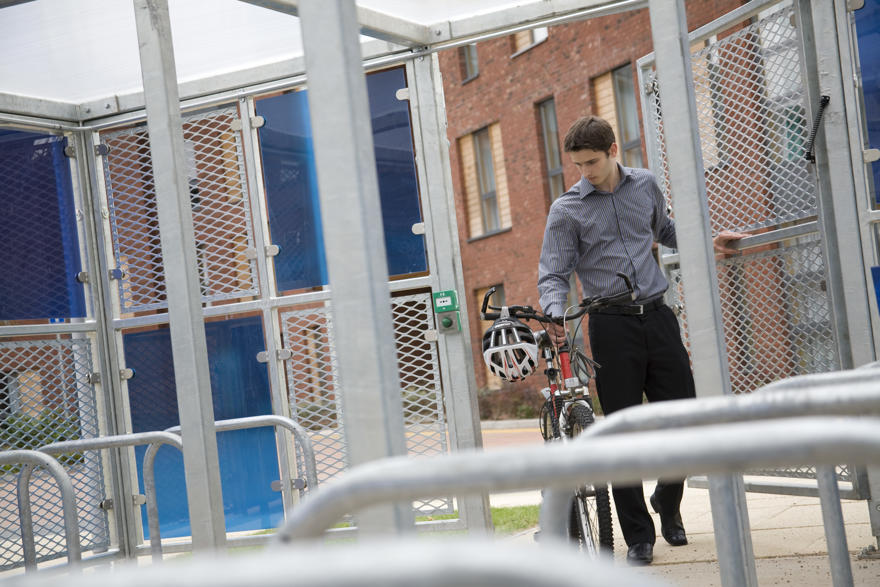
There are plenty of provisions in place for students commuting to University. We've put together a guide for commuter students with helpful advice and information on how to get the most out of your university experience.
Our Student’s Union also has a Commuter Students' Network, where you can chat and attend social events with other commuting students. You can access this if you choose to study with us.
Transport
There are lots of different options if you are looking to commute into university.
We have lots of car and motorcycle parking available on our campuses. You can apply for a parking permit if you will regularly park at the university. Our Severn Campus has also become one of the largest electric vehicles charging parks in Europe, offering 100 charging points for our students.
If you are looking to cycle to university we provide free bike repair facilities to maintain your own bike, and plenty of secure bike parking.
There are also plenty of public transport routes if you are travelling by bus or train. As a mature student, you can also apply for a 16-25 railcard no matter your age, as long as you show evidence of enrolment for a course.
Eating and Drinking on Campus
If you find yourself hungry and thirsty on campus, there are plenty of options. The Uni Food Hub has plenty of food options available, alongside our campus shop and The Hanger. We also offer Starbucks Coffee on two of our campuses and Costa on St John's Campus.
Study Spaces
Our Peirson study centre is open 24 hours to all students and is the perfect place to complete work in between your lectures. It is home to 212 student access PCs, a suite with 40 student access iMacs and 396 study spaces including 42 silent study spaces or a collaborative downstairs area.
Accommodation for mature students

Finding the right student accommodation is an important part of your university experience. There are several options to choose from and our Accommodation Team and the Students' Union are able to offer help and advice.
On campus accommodation
Mature Students can choose to live in university accommodation and the University of Worcester has a great variety of halls, including specially designated postgraduate houses.
The University guarantees accommodation for all new, first-year undergraduates, provided they have firmly accepted their place by the UCAS deadline.
Our university accommodation is based right on campus, so you are only a short walk away from your lectures. For further information, visit our accommodation pages.
Private rented accommodation
If you’re a mature student and wish to live in private accommodation, the Accommodation Office can help you with information and advice to find the best living space to suit you. The University is located in a pleasant and friendly Worcester suburb, not far from the city centre, with plenty of private options available.