Whether your interests lie in the gothic, queer, postcolonial, early modern or contemporary, in children’s literature or poetry – we’ll help you turn your passion into a practical skill set that will open up a diverse range of careers.
of students are in work and/or further study 15 months after graduating
Overview
We’ll get to know you well throughout your time at Worcester. Our open-door policy means you’ll receive detailed, personalised feedback on assessments, and support with your academic writing and research. Our teaching team will encourage your passion for literature while supporting you to develop an appreciation of its personal, cultural and historical significance. From classic novels to unfamiliar texts, you’ll be challenged to explore different ways to interpret and analyse literary works.
Much of your learning will take place in small group seminars, meaning you’ll have plenty of opportunities to get to know your fellow students through informal discussions and close-reading activities. During these seminars, your lecturers will help you bridge the gap between literary texts, the societal and cultural contexts surrounding them, and the theoretical concepts explored during your lectures.
Our flexible module options mean you can study the genres and topics that mean the most to you. We offer modules in everything from Elizabethan revenge plays to how literary texts represent and reflect the human body. In Year Three, you can take your interests further with an independent dissertation project on a literary topic of your choice, supported by a member of our teaching team.
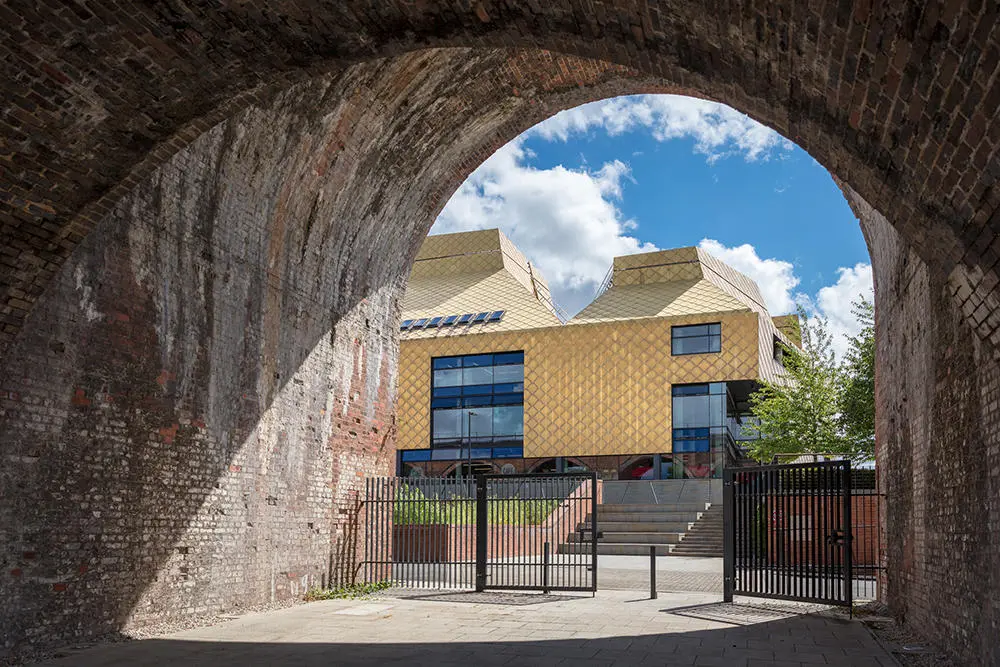
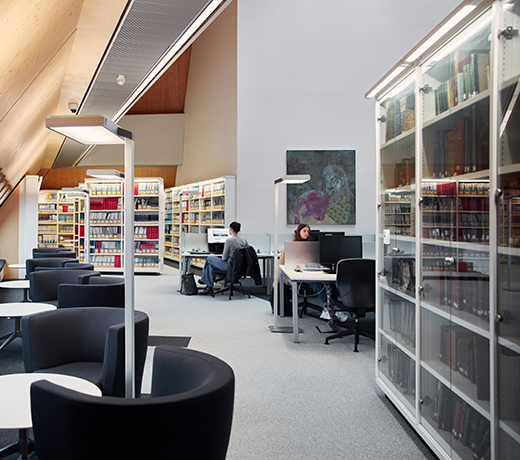
You’ll study in – and explore the literary heritage of – an ancient Cathedral city steeped in history, having been the location of the final battle of the English Civil War. Our students benefit from research trips to the Cathedral Library, with its priceless collection of rare books and manuscripts, as well as the twelve miles of archives stored within our university library, The Hive.
Work Experience
As you progress through the course, you’ll become an increasingly adept reader, writer and researcher. You’ll have lots of opportunities during your time at Worcester to apply what you’ve learned in a professional context and explore your future career options.
In Year One, you’ll complete a mandatory work-based module, with opportunities to visit local organisations, including Worcester Commandery, the Tudor House Museum, and the Swan Theatre. You’ll be asked to research Worcester’s literary heritage and use that research to produce an informational resource for the public, such as a webpage, interactive tourist map, exhibition guide or creative writing anthology.
We also offer an optional work experience placement module in Year Two, enabling you to complete a short voluntary placement with a local organisation. Past work experience locations have included schools, local arts and heritage organisations, and The Hive Library.


Course content
Each year you will study a mix of mandatory and optional modules. Our diverse curriculum, taught by active researchers, will allow you to explore many different literary themes and eras before you choose your dissertation specialism in Year Three.
We regularly review our courses to reflect the latest research and developments in the subject area, as well as feedback from students, employers and the wider sector. As a result, modules may change to ensure the course remains current and relevant.
Optional modules will run if enough students choose to study them. It is not guaranteed that all modules will be offered every year.
Optional modules
Careers
Our course has been designed with your future in mind, meaning you’ll graduate with valuable transferrable skills in writing, researching, proofreading, analytical thinking, public speaking and collaboration.
A degree in English Literature could be your first step toward your career as a:
- Digital copywriter
- Editorial assistant
- Publishing proofreader
- Web content manager
- Academic librarian
- Teacher
- Lexicographer
- Communications officer
Opportunities to progress
You may wish to take your learning further and progress onto postgraduate study. Relevant postgraduate degrees at Worcester include:
Some former graduates have also chosen to complete a Law Conversion Course (commonly known as a PGDL or a GDL). This is a postgraduate qualification designed for non-law graduates looking to pursue a career in the legal field.
Course highlights



Teaching and assessment
You’ll primarily be taught through a combination of lectures, seminars and interactive workshops.
There are no exams on this course. Instead, you’ll be assessed using methods designed to prepare you for your future career, such as essays, research reports, blog entries and presentations.
Teaching and assessment contents
You will be taught through a combination of workshops, lectures, seminars, research trips to cultural locations in the region, and film screenings. Interactive workshops take a variety of formats and are intended to enable the application of learning through discussion and small group activities. Seminars enable the discussion and development of understanding of topics covered in lectures. All modules are supported by the use of the virtual learning environment and other learning technologies.
You will also have the opportunity to gain employability skills through work-based learning. The primary focus of this provision is the year 2 Work Project module where students gain valuable experience of work.
In addition, meetings with Personal Academic Tutors are scheduled on at least four occasions in the first year and three occasions in each of the other years of a course.
Meet the English Literature team
Meet some of the English Literature team that you will learn from.

Professor Nicoleta Cinpoes
Nicoleta Cinpoes joined the University of Worcester in 2007. She teaches Renaissance Literature, is International Exchanges Liaison for the Institute of Arts and Humanities and co-director of Worcester's Early Modern Research Group.
She has edited Doing Kyd: A Collection of Critical Essays on the Spanish Tragedy for Manchester University Press (2016) and is currently collaborating on a new Romanian translation of Shakespeare's complete works, writing introductions to Hamlet (2010), Titus Andronicus, Measure for Measure, The Merchant of Venice and The Comedy of Errors.
Dr Lucy Arnold
Dr Lucy Arnold is a specialist in Contemporary literature, with particular research interests in contemporary gothic, narratives of haunting, contemporary women’s writing and psychoanalytic criticism. Her teaching experience spans a wide range of periods and genres but focusses on twentieth and twenty-first century literature. Her published work to date has concerned the writing of Booker Prize winning novelist Hilary Mantel, with her monograph, Reading Hilary Mantel: Haunted Decades, published with Bloomsbury in 2019.
Dr Sharon Young
Dr Sharon Young is a Fellow of the HEA and her teaching interests include, Renaissance, Restoration and eighteenth-century literature, women's poetry, and literary theory.
Sharon's research focuses mainly on women's poetry of the early modern period, Renaissance revenge tragedy and women's manuscript culture. Sharon has published on female poets and the critical debates of the early eighteenth century and Mary Leapor.
Professor Nicoleta Cinpoes
Nicoleta Cinpoes joined the University of Worcester in 2007. She teaches Renaissance Literature, is International Exchanges Liaison for the Institute of Arts and Humanities and co-director of Worcester's Early Modern Research Group.
She has edited Doing Kyd: A Collection of Critical Essays on the Spanish Tragedy for Manchester University Press (2016) and is currently collaborating on a new Romanian translation of Shakespeare's complete works, writing introductions to Hamlet (2010), Titus Andronicus, Measure for Measure, The Merchant of Venice and The Comedy of Errors.
Dr Lucy Arnold
Dr Lucy Arnold is a specialist in Contemporary literature, with particular research interests in contemporary gothic, narratives of haunting, contemporary women’s writing and psychoanalytic criticism. Her teaching experience spans a wide range of periods and genres but focusses on twentieth and twenty-first century literature. Her published work to date has concerned the writing of Booker Prize winning novelist Hilary Mantel, with her monograph, Reading Hilary Mantel: Haunted Decades, published with Bloomsbury in 2019.
Student case studies
Find out more about some recent English Literature students.
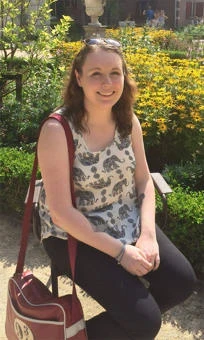
Niamh Fitzpatrick
As well as achieving a degree in English Literature, Niamh Fitzpatrick has won an award for her research from the University’s Early Modern Research Group.
“I chose to study at Worcester as the University offered an amazing course with dedicated lecturers and a vast range of modules, ranging from the Early Modern Period to Modern Day,” said Niamh.
Niamh,who is from Birmingham, is now studying for a Master’s degree in Shakespeare Studies at the University of Birmingham and is hoping to go on to complete a PhD.

Charlotte Taylor
English Literature graduate Charlotte Taylor won the Roger Ebbatson Prize for Research in English Literature 2020 for her work on novelist Margaret Atwood’s bestseller The Handmaid’s Tale.
“The English department at Worcester have given me so much more than a degree. They have given me a confidence in my academic abilities; an unconditional support system; the chance to have fun and experiment with my work, to be creative and think outside the box; and they have cemented my desire to be a lecturer.”
Since completing her undergraduate degree, Charlotte has started her Master’s in English at Worcester, which she is due to complete in September 2021. She has recently been awarded a place on the University of Leeds PhD programme to research the work of the American contemporary novelist, Elizabeth Strout.
Niamh Fitzpatrick
As well as achieving a degree in English Literature, Niamh Fitzpatrick has won an award for her research from the University’s Early Modern Research Group.
“I chose to study at Worcester as the University offered an amazing course with dedicated lecturers and a vast range of modules, ranging from the Early Modern Period to Modern Day,” said Niamh.
Niamh,who is from Birmingham, is now studying for a Master’s degree in Shakespeare Studies at the University of Birmingham and is hoping to go on to complete a PhD.
Charlotte Taylor
English Literature graduate Charlotte Taylor won the Roger Ebbatson Prize for Research in English Literature 2020 for her work on novelist Margaret Atwood’s bestseller The Handmaid’s Tale.
“The English department at Worcester have given me so much more than a degree. They have given me a confidence in my academic abilities; an unconditional support system; the chance to have fun and experiment with my work, to be creative and think outside the box; and they have cemented my desire to be a lecturer.”
Since completing her undergraduate degree, Charlotte has started her Master’s in English at Worcester, which she is due to complete in September 2021. She has recently been awarded a place on the University of Leeds PhD programme to research the work of the American contemporary novelist, Elizabeth Strout.
Entry requirements
UCAS tariff points required: 104
| Qualification | Grade |
|---|---|
| A-level | BCC (including a minimum grade of C in English) |
| BTEC National Extended Diploma | DMM |
| T-level | M |
We do accept Access to HE Diplomas and other qualifications which may not exactly match the combinations above. Work out your estimated points with the UCAS tariff calculator.
Any questions?
If you have any questions about entry requirements, please call our Admissions Office on 01905 855111 or email admissions@worc.ac.uk.
Fees
Fees contents
UK and EU students
In 2026/27 the standard fee for full-time home and EU undergraduate students on BA/BSc/LLB degrees and FdA/FdSc degrees is £9,790 per year.
Tuition fees are reviewed annually and may increase each year for both new and continuing students.
For more details on course fees, please visit our course fees page.
International students
In 2026/27 the standard tuition fee for full-time international students enrolling on BA/BSc/LLB degrees and FdA/FdSc degrees is £17,200 per year.
Tuition fees are reviewed annually and may increase each year for both new and continuing students.
For more details on course fees, please visit our course fees page.
How to apply
How to apply contents
Applying through UCAS
UCAS is the central organisation through which applications are processed for full-time undergraduate courses in the UK.
Read our how to apply pages for more information on the application process, or if you’d like to apply for part-time study.
English Literature BA (Hons) - Q300
Contact
If you have any questions, please get in touch. We're here to help you every step of the way.
Dr Sharon Young
Senior Lecturer in English Literature, Course Leader for MA English and MA Cultural Studies and Admissions Tutor
s.young@worc.ac.ukDr Lucy Arnold
Course Leader for English Literature, School Research & Knowledge Exchange Coordinator
lucy.arnold@worc.ac.ukAdmissions Office
admissions@worc.ac.uk01905 855111More to explore
Open Days
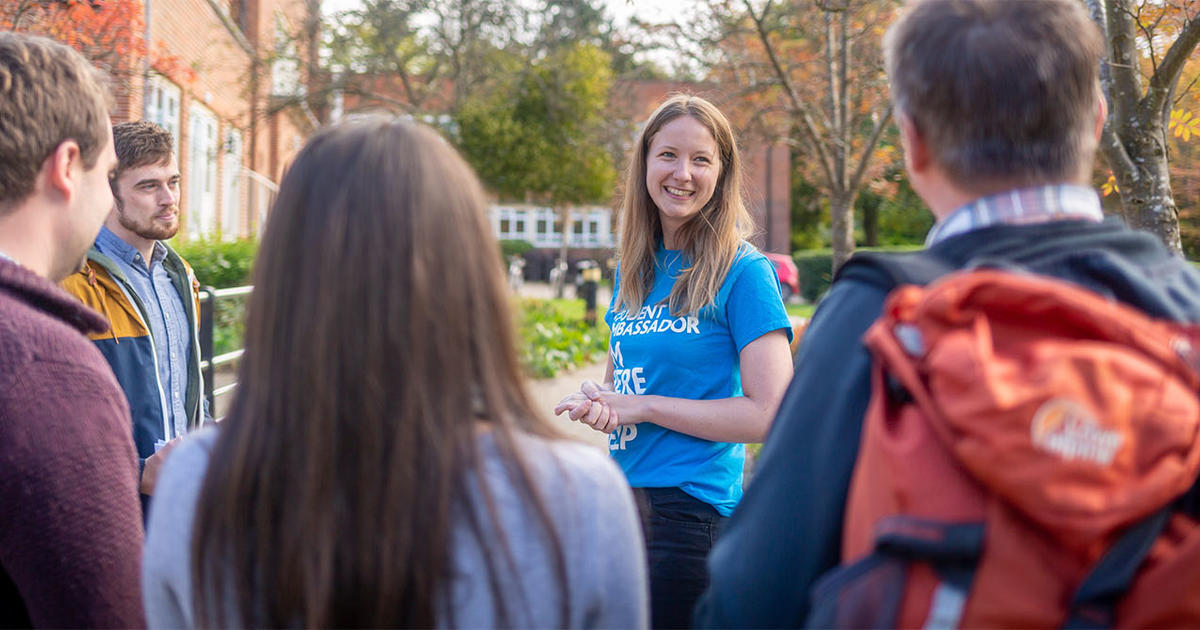
Visiting us is the best way to get a feel for student life at the University of Worcester.
The City of Worcester
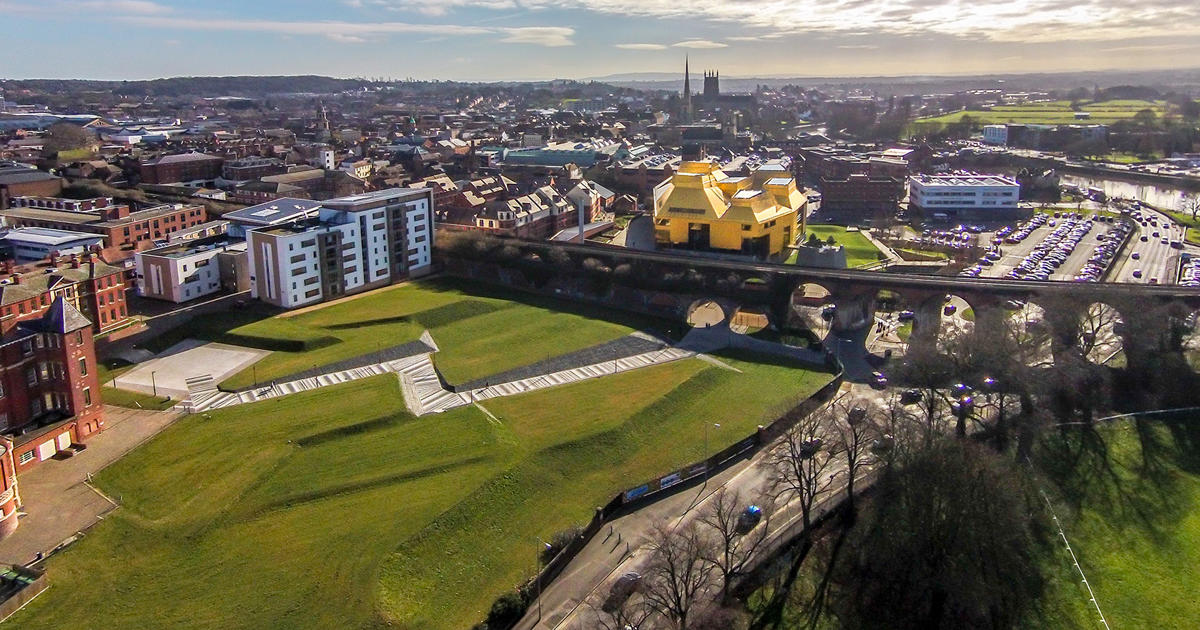
Worcester is a welcoming university city with great transport links and plenty of student parking.
Accommodation
Benefit from our accommodation guarantee. We have rooms on campus to suit every budget including en-suite options.