We recognise that it is our responsibility to encourage our suppliers and contractors to minimise negative environmental and social effects associated with their products and services they provide. Our catering contract is one of our largest contracts. We have therefore complied with the Department for Environment Food and Rural Affairs (DEFRA)’s guidelines on sustainable procurement, when tendering and awarding this.
We will also strive to ensure that local and smaller suppliers are not discriminated against in the procurement process and specifications, within the parameters of our overall purchasing strategy. We have key performance indicators, see below, that are aligned with our sustainable food strategy in our catering contract. The University has set several targets and objectives to help us achieve these aims within an annual sustainable food action plan. Initiatives on food waste include Too Good to Go.
Another important factor in sustainable food is ethical procurement i.e., better prices, decent working conditions, local sustainability and fair terms for farmers and workers in the developing world. We aim to retain Fairtrade Status as Fairtrade tackles the injustices of conventional trade, which traditionally discriminates against the most vulnerable. For more information view our Fairtrade page.
We have The Sustainable Restaurants Association 3 Stars accreditation.
Sustainable Restaurants Association
The Sustainable Restaurants Association’s Food Made Good programme helps us reduce our food waste, improve energy efficiency, and improve the supply chain. The holistic accreditation covers 10 key areas of sustainability, under sourcing, society and environment, and makes it an ideal accreditation system for universities that often provide the infrastructure, utilities etc even in outsourced catering contracts. We are proud to have achieved 3-star rating in 2019 and continued to be awarded it again in 2022, 2024 and 2026, the highest rating possible. This covers all the food service provisions throughout the university and is valid until August 2028.
Sustainable Food SMART Targets
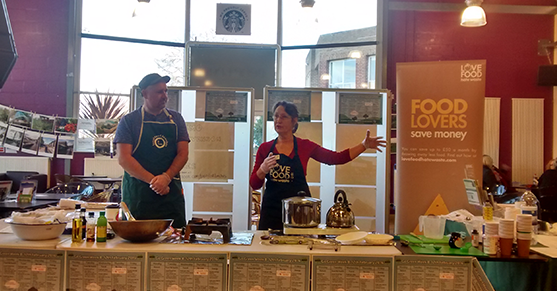
Annual quantitative and qualitative targets are set and the sustainability budget identifies specific projects to be achieved throughout the year. Please see our Sustainability Targets 2025-2026.
Foodbank
We continue to promote the Foodbank collections amongst students and staff to help support people struggling to feed themselves. This is the Foodbank collection unit located in the University's Hines Building.
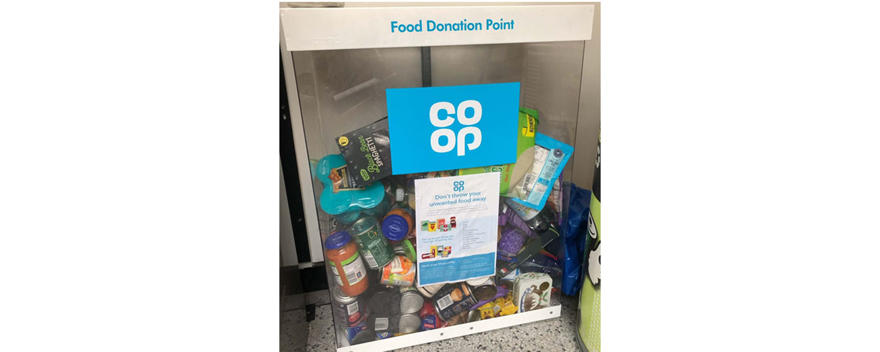 The Foodbank collection unit located in the University's Hines Building
Worcester Foodbank provides emergency food and support to local people and provided over 231,000 meals last year. It is part of a nationwide network of foodbanks, supported by The Trussell Trust, working to combat poverty and hunger across the UK. The cost of living is putting pressure on foodbanks and their users - foodbank networks have reported an increased demand by 10 percent. With inflation predicted to continue rising, the charity expects a further surge in demand.
Colleagues in the Medical School have organised a second Community Cupboard at Severn Campus.
Community Cupboard
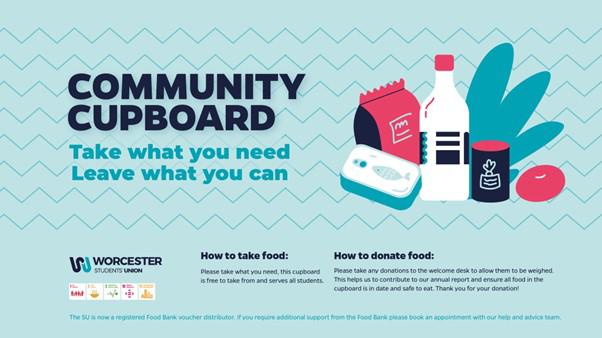
The Students’ Union are accepting donations for their Community Cupboard and Community Fridge. Donations of toiletries and non-perishable food and drink are warmly welcomed to help provide free food and toiletries to students in need (please ensure that these goods are both unopened and in date). For further details see cost of living.
Student projects
SU Eatable
Students took part in a really successful three year project called SU Eatable Life One Planet Plate research project with Sustainable Restaurants Association. Here is our Lebanese stew video from this project. See our five top tips for sustainable cooking plus over 170 recipes.
University Allotment
An exciting food project saw the creation of a cob 'earth' oven built by design students as part of their Green Design module on the University student and staff allotments. There have been many pizza parties using the oven and picking food directly from the allotments. The student Residential Life Team used the oven in their summer training. Read Klara's story on how chef Julien inspired the day. The cob oven plinth, generously donated from re-use supplied by Envirotech provides shelter for wood to dry which is collected by the grounds staff from tree management projects, and Ringway kindly donated the new wheelchair access which was installed in 2022.
Free Drinking Water
There are many drinking water fountains throughout all the university sites, including the Students' Union and the main dining room, and these are shown on these maps which cover the three university campuses.
Our current targets and some examples of how we are going to achieve them can be found in our sustainability targets document.