
At Worcester, you’ll benefit from excellent links with NHS Trusts and local healthcare providers, giving you access to a wide range of clinical placements across hospital and community settings
grant that you won't need to pay back
Overview
This course is designed for people who already hold a degree and want to become a registered mental health nurse. Whether you’ve worked in health or social care, or are already a registered nurse looking to qualify in a second field of practice, this course offers a fast-track route into mental health nursing.
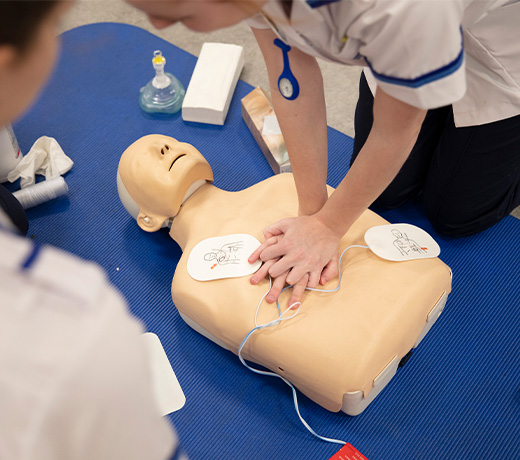
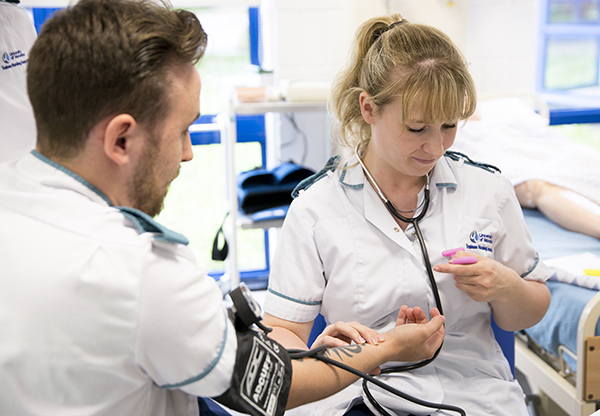
You’ll learn how to deliver safe, compassionate and person-centred care to people experiencing a wide range of mental health needs. The course will help you develop the specialist skills needed to support recovery, promote wellbeing, and build therapeutic relationships with patients across all age groups. You’ll gain confidence through a mix of theory, hands-on skills sessions and simulation days, which take place in our advanced simulation suites that replicate real clinical environments.
Through realistic case studies and scenarios, you’ll explore how mental health nurses work collaboratively with patients, families, and multidisciplinary teams. You’ll also learn how to assess mental health conditions, manage complex care needs, and support people in making informed choices about their treatment and recovery.
Your lecturers will get to know you personally. Through tailored support and reflections, they will get to know your strengths and where you can develop. When you start, you’ll be assigned a Personal Academic Tutor, usually this is one of the lecturers teaching your course and they typically remain with you throughout your studies.
By the end of the course, you’ll be ready to register with the Nursing and Midwifery Council (NMC) and begin your career as a qualified adult nurse.
Placements
Around half of your time on the MSc Nursing (Mental Health) course will be spent in clinical practice, giving you the opportunity to apply your learning in real healthcare settings. Placements are arranged in blocks across the two years, and you’ll typically experience at least two different settings each year.
We work closely with a wide range of NHS Trusts and healthcare providers across the region, including:
- Worcestershire Acute Hospitals NHS Trust
- Herefordshire and Worcestershire Health & Care Trust
- The Dudley Group NHS Foundation Trust
- Wye Valley NHS Trust
- Gloucestershire Hospitals NHS Trust
You’ll gain experience in a variety of environments, including hospitals, community health services and specialist care settings. Some placements may focus on health promotion and disease prevention, giving you insight into the wider factors that affect people’s health.
Placements will cover shifts across a 24-hour period, 7 days a week, in line with the NMC standards for registration. There may also be opportunities to take part in international elective placements, offering a broader perspective on healthcare and nursing practice.
During your placements, you’ll be supported by experienced nurses and practice supervisors, with regular contact from your tutors. These practical experiences, combined with simulation-based learning on campus, will help you develop the confidence, skills and professionalism needed to become a compassionate adult nurse.
Course content
On this accredited course you’ll study theories backed up by substantial evidence, and then get the opportunity to apply this learning in professional practice.
We regularly review our courses to reflect the latest research and developments in the subject area, as well as feedback from students, employers and the wider sector. As a result, modules may change to ensure the course remains current and relevant.
All modules are mandatory to ensure you’re eligible to register as a nurse with the NMC.
Careers
This course prepares you for registration with the Nursing and Midwifery Council (NMC), so you can begin a rewarding career as a qualified mental health nurse.
Many of our graduates go on to work in NHS mental health services, including inpatient units, community teams, crisis response, and specialist services such as CAMHS (Child and Adolescent Mental Health Services) or perinatal mental health. Others find roles in private healthcare, social services, schools, the prison service, or choose to work overseas.
You’ll be supported with career planning throughout the course, including mock interviews, CV writing workshops and one-to-one guidance from your Personal Academic Tutor. We also invite local employers onto campus to meet students and discuss job opportunities. Thanks to our strong reputation across the Midlands, many students secure roles with NHS Trusts before they graduate.
Once qualified, you may choose to specialise in areas such as psychological therapies, forensic mental health, substance misuse, or early intervention services. With experience, you could progress into roles such as clinical team leader, advanced nurse practitioner, or mental health educator.
Opportunities to Progress
After qualifying, you may choose to continue your professional development through further study. Many graduates go on to study courses such as the MSc Advanced Clinical Practice, which can lead to advanced roles in clinical care. You could pursue research-focused routes like the Nursing and Midwifery PhD or even graduate-entry Medicine to become a doctor.
Course highlights


Teaching and assessment
Teaching is a mix of interactive seminars, lectures, one-to-one tutorials and practical skills sessions.
Your assessments will help prepare you for a career as a nurse, and include observations of professional skills, writing reflective essays, presenting, group discussions and creating care plans.
Teaching and assessment contents
Theory:
Theory teaching is delivered through a structured programme informed by constructivist, experiential, and transformative learning principles, ensuring that students actively engage with content and apply knowledge in authentic contexts. Theory teaching is delivered in the following formats:
- Lead Lectures (All students, online and synchronous): Introduce universal concepts. These sessions provide the core nursing concepts and foundational knowledge applicable across all fields of nursing practice.
- Seminars (Field of practice groups, online and synchronous): Contextualise concepts into Adult or Mental Health nursing practice. Seminars use small-group activities to engage in dialogue, debate, and reflection, encouraging deeper understanding and critical thinking.
- Workshops (Field of practice groups, online and synchronous): Using interactive case-based and problem-solving activities, allowing students to apply theory to practice and develop clinical reasoning skills in a structured, interactive learning environment.
- Guided learning (Hybrid: asynchronous tasks with synchronous feedback touchpoints): Reinforce academic and digital literacy skills. Guided learning activities are structured tasks that support heutagogical learning principles that encourage autonomy and lifelong learning. Guided learning activities are time-bound and tutor-monitored, distinguishing them from self-directed and independent learning.
- Online directed learning (Asynchronous): Delivered through Blackboard Ultra, directed learning refers to activities delivered online, including discussion boards, quizzes, and reflective journaling.
- Independent learning: Independent self-study is designed to develop critical thinking and academic autonomy, support heutagogy, and prepare students for lifelong learning and professional development. It is supported by a range of excellent learning facilities, including the Hive and library resources, the virtual learning environment, and extensive electronic learning resources.
Practice learning:
Practice learning is central to the MSc Nursing programme and is underpinned by experiential learning theory and social learning principles, ensuring that students develop competence through exposure to authentic, real-world experiences. These approaches align with the NMC (2024) Standards of Proficiency for Registered Nurses and the NMC (2023) Part 2: Standards for Student Supervision and Assessment. Practice learning consists of simulated practice learning and undertaking practice placements in a diverse range of clinical settings across the programme. The real-world learning environments that clinical and simulated practice placements offer foster work-readiness, professional development, confidence, and competence.
In line with the NMC (2023) Part 3: Standards for Pre-registration Nursing Programmes, practice learning constitutes 50% of the total programme hours. Practice placements are delivered in blocks, enabling students to immerse themselves in practice environments and apply theoretical knowledge in real-life contexts, a key feature of experiential learning. Students will complete two to three placements per part (year) in their chosen field of either adult or mental health nursing. Students may also undertake ‘spoke’ experiences in alternative or non-traditional settings to broaden their exposure to care across the lifespan. Experience across a range of settings aligns with a transformative approach to learning by encouraging students to challenge their assumptions, develop cultural responsiveness to the individuals they encounter, and be adaptable to diverse care settings and needs.
Students are supernumerary in practice settings. They are supported and supervised by their Practice Supervisors and assessed by Practice Assessors, who have undertaken additional training to undertake these roles in the practice learning environment. Students will also be assigned an Academic Assessor in line with the NMC (2023) Part 2: Standards for Student Supervision and Assessment for each part of their course, who will provide additional support during practice learning and ensure that the required standards are met to progress through the programme or complete it at the end of the final part. The relationships between student, Practice Assessor, Practice Supervisor and Academic Assessor reflect a coaching pedagogy that fosters the development of professional identity and confidence.
To complement real-world practice, students will complete 150 hours of simulated practice learning as part of the MSc Nursing programme. Simulated practice learning activities, which are delivered on-campus in high-fidelity simulation suites and community settings and mirror authentic clinical scenarios, they integrate technology to enhance learning, supporting digital literacy and aligning with NHS digital transformation priorities. Simulation incorporates role-play, manikins, and video-assisted reflections, embedding formative feedback from staff and peers throughout to promote continuous improvement and safe practice. Immersive simulations are realistic clinical scenarios where students gain experience with clinical procedures and skills in realistic settings, contextualising learning. The pedagogical approach to practice learning facilitates a transformative experience, developing autonomous and reflective practitioners capable of navigating complex care environments and contributing to service improvement. All simulated practice learning is supported and supervised by Practice Supervisors.
Entry requirements
Applications are welcomed from individuals with:
- A minimum of a lower second-class Honours degree (2:2) in any subject
- GCSE grade C/4 or level 2 equivalent in Maths and English
- Working in a paid or voluntary capacity in a health or care setting within the last five years
You'll be required to demonstrate health and character sufficient to ensure safe and effective practice. This includes a satisfactory Enhanced DBS and occupational health assessment.
If you have lived, studied or worked abroad for a minimum of three months at any point before starting the course will be asked to provide a Police Certificate/Certificate of Good Conduct from the country you were living in.
All applicants will be required to complete a Recognition of Prior Learning (RPL) portfolio of evidence for 750 theory hours and 750 practice hours which equate to year one of a pre-registration nursing programme (mapped to the NMC standards of proficiency and NMC code).
Please note that this course is not available to applicants who require a student visa.
Any questions?
If you have any questions about entry requirements, please call our Admissions Office on 01905 855111 or email admissions@worc.ac.uk.
Fees
Fees contents
UK and EU students
The standard tuition fee for full-time home and EU students enrolling on MA/MSc/MBA and MRes degrees in the academic year 2027/28 is £9,990 per year.
Tuition fees are reviewed annually and may increase each year for both new and continuing students.
For more details on course fees, please visit our course fees page.
International students
The standard fee for full-time international students enrolling on MA/MSc/MBA and MRes degrees in the academic year 2027/28 is £18,900 per year.
Tuition fees are reviewed annually and may increase each year for both new and continuing students.
For more details on course fees, please visit our course fees page.
How to apply
How to apply contents
Applying through UCAS
UCAS is the central organisation through which applications are processed for full-time undergraduate courses in the UK.
Read our how to apply pages for more information on the application process, or if you’d like to apply for part-time study.
Contact
If you have any questions, please get in touch. We're here to help you every step of the way.

Admissions Office
admissions@worc.ac.uk01905 855111More to explore
Open Days
Visiting us is the best way to get a feel for student life at the University of Worcester.

The City of Worcester
Worcester is a welcoming university city with great transport links and plenty of student parking.

Accommodation
Benefit from our accommodation guarantee. We have rooms on campus to suit every budget including en-suite options.