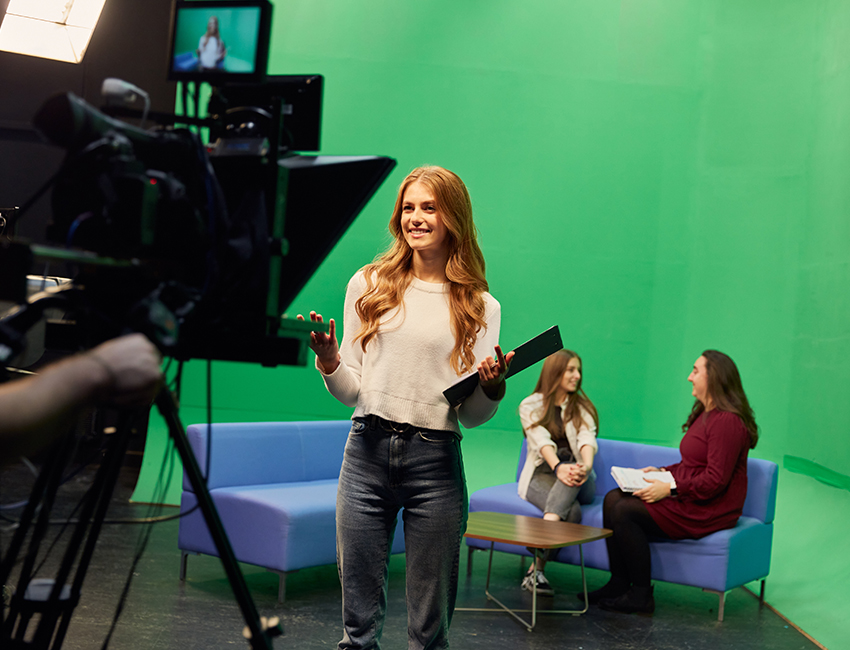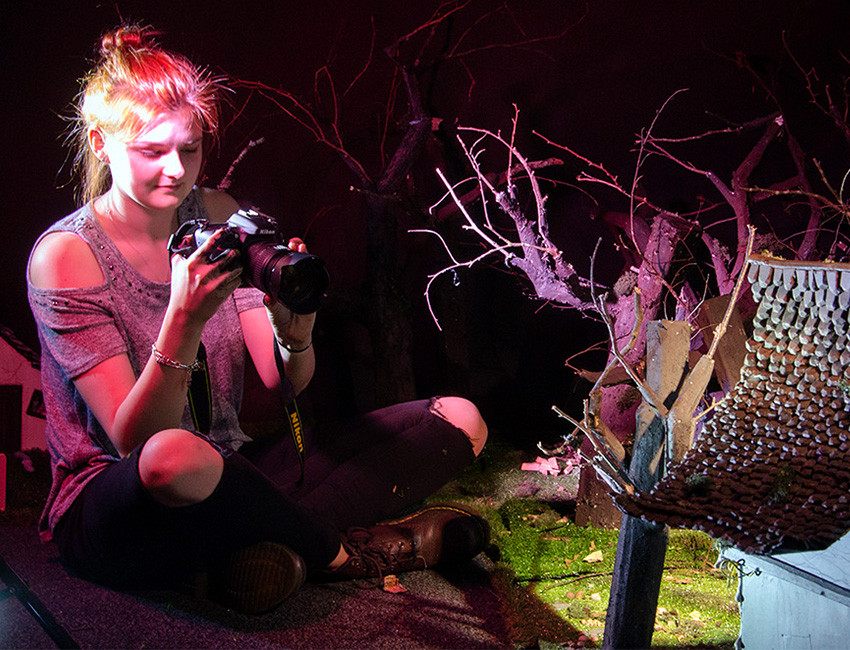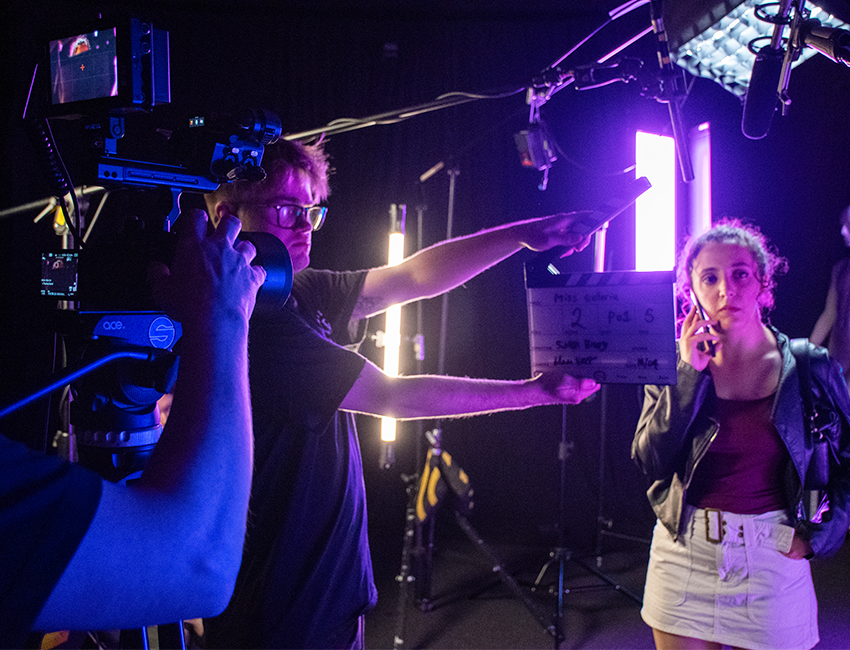
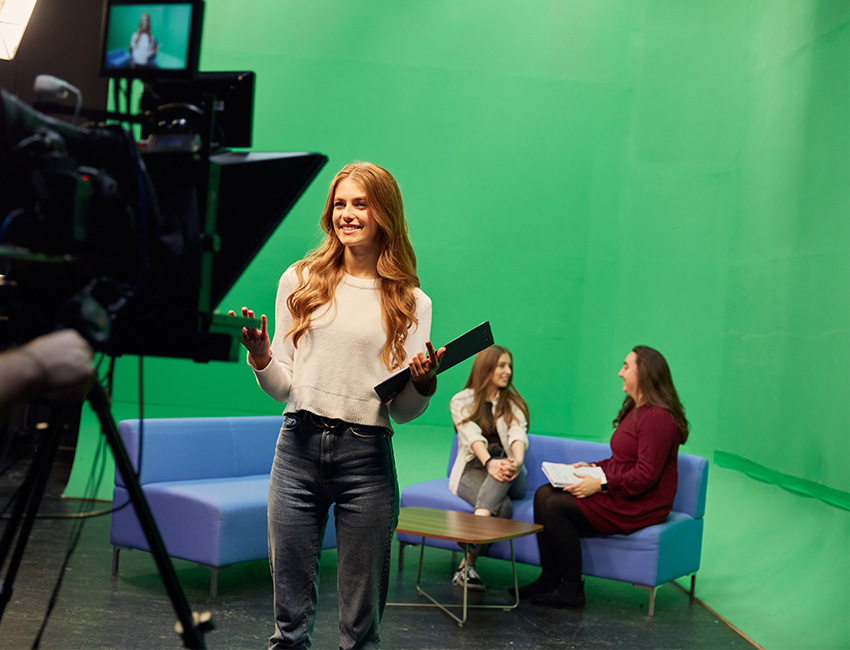
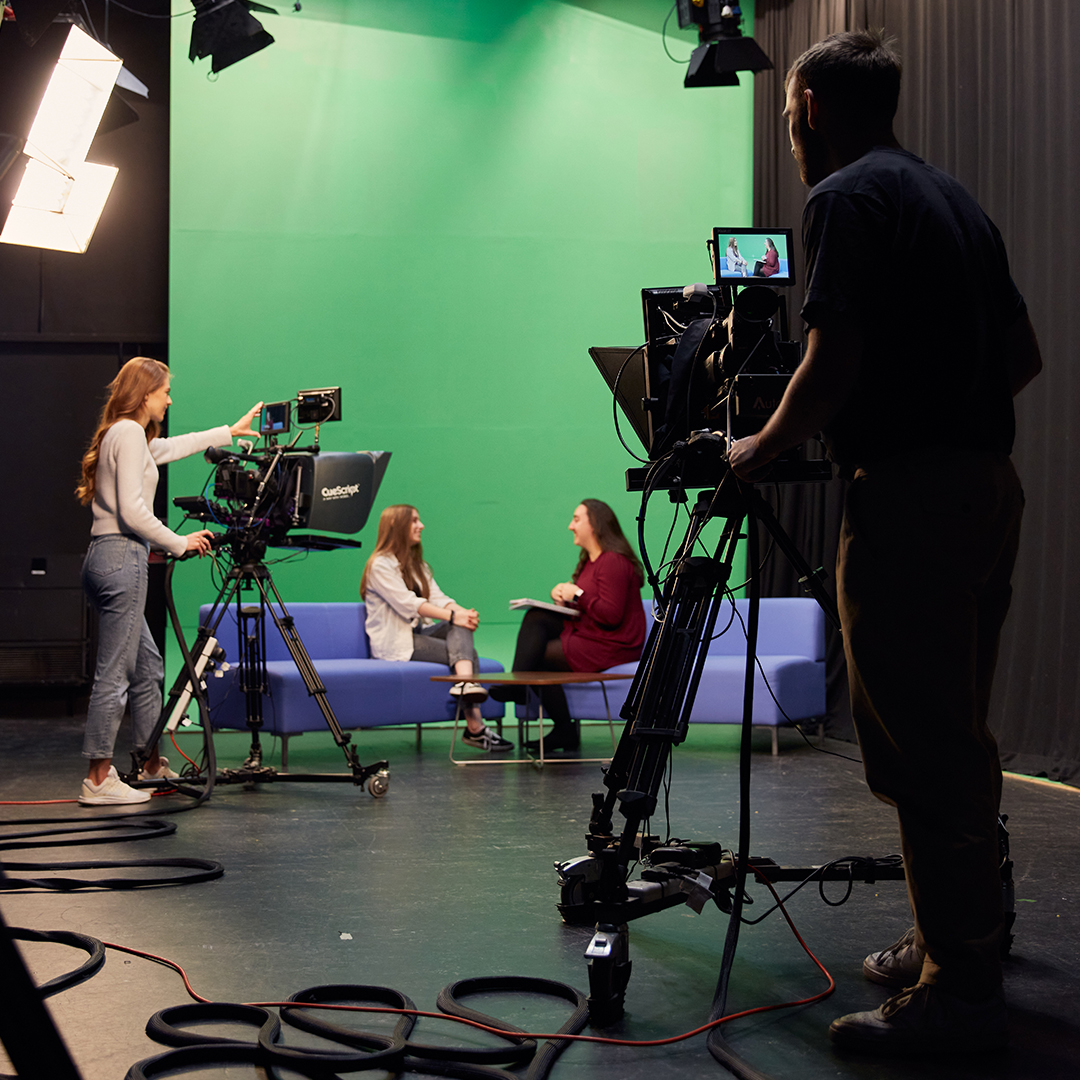
At Worcester you’ll use our industry standard film and editing equipment from the start, helping you feel confident in using various types of film equipment. You’ll also have time to experiment with different ways of using the equipment, developing your unique style as a content creator.
Our Communications and Media courses are top in the UK for teaching quality
for graduate prospects in drama, dance and cinematics
Overview
Digital technology has transformed the way film is created. On this course, you’ll explore how media and film influence society, and how different forms of media reflect the time and culture they were made in. You’ll also investigate how films, TV and online content can shape the way people think, act and connect with the world.
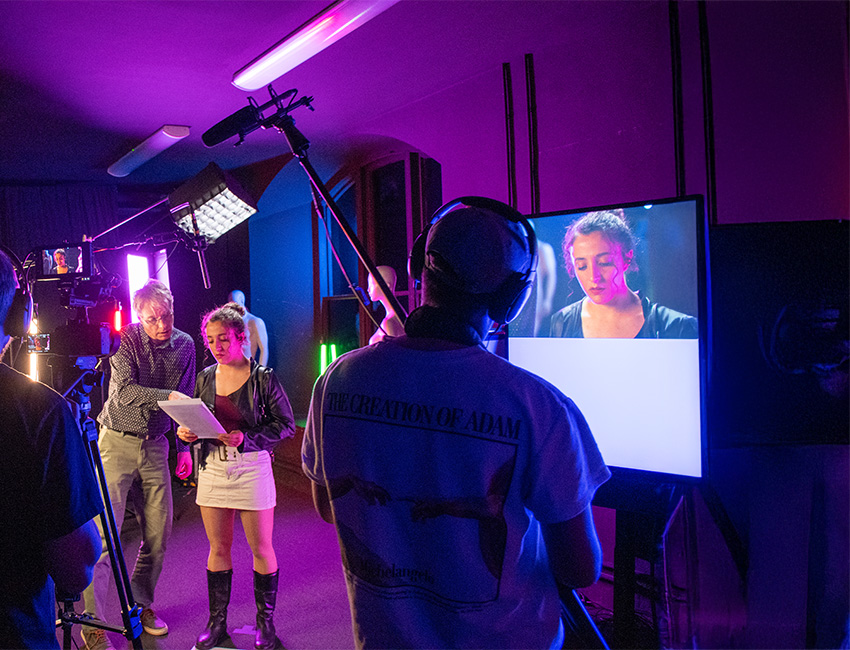
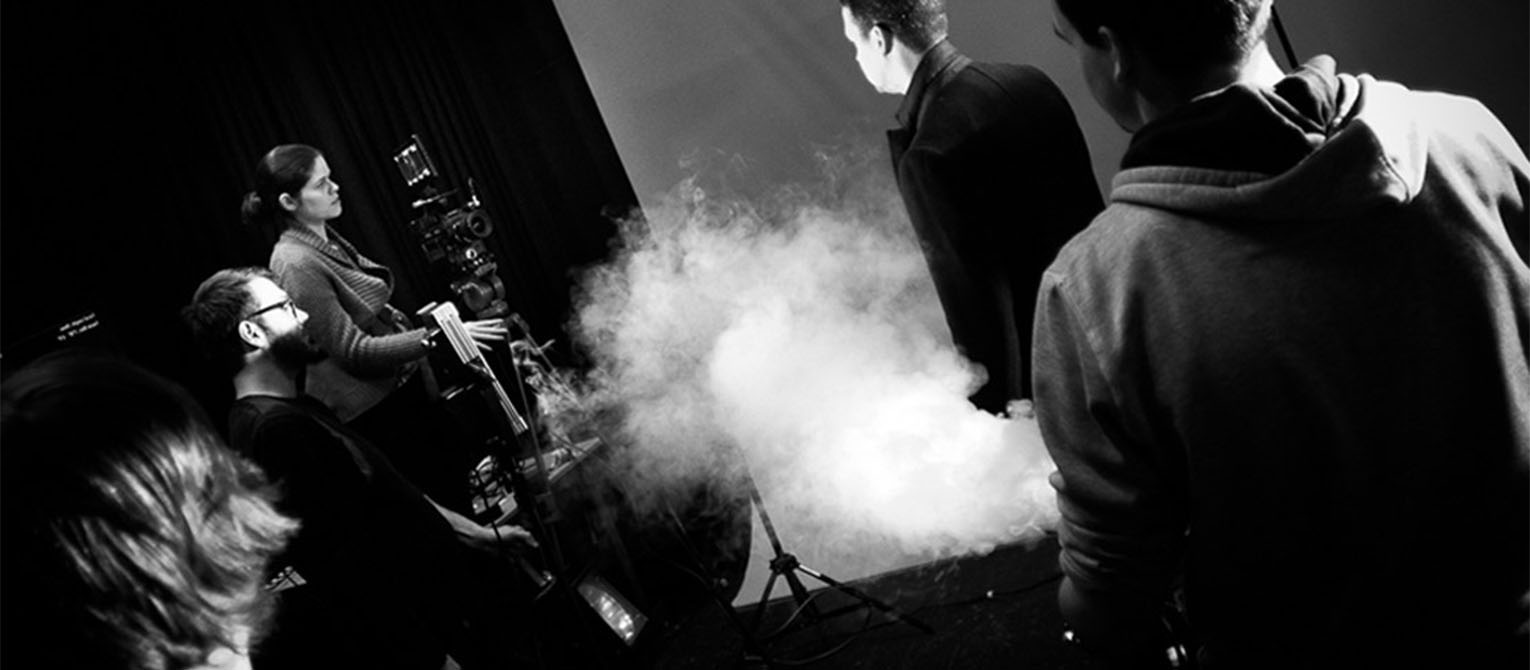
We believe in learning by doing. From your first week, you’ll work as part of a creative filmmaking team, just as you would in the industry. You’ll try out different production techniques and find your specialist role, whether that’s production design, directing, cinematography, editing or sound.
You’ll explore established and emerging media fields, including social media politics, marketing and immersive digital media. You’ll meet leading professionals from the media, creative and tech industries and learn directly from experts in digital marketing, content creation and cultural and heritage events.
Throughout the course, you’ll examine the key themes, theories and ideas that shape film and media, alongside study global screen cultures, including crime, sci-fi, horror, romance, manga and kawaii.
Explore how production and distribution adapt to worldwide audiences and apply this knowledge to your filmmaking to create affective and impactful films, documentaries and more.
Learning alongside other passionate filmmakers in a creative arts environment will fuel your imagination and help you build a valuable network. This course will help grow your passion for media, strengthen your practical filmmaking skills and prepare you for a future career in the media industry.
Work project
In your second year, you will have the option to take on a work project. With support from staff and University support services you'll organise your own project opportunity, and take the chance to develop your practical skills and network with the local community. You'll experience first-hand what it can be like to work within film and media and learn how to launch and develop your own creative project.
Course content
Our modules are informed by the latest research and technical advancements within the film and media industry, meaning you’ll be learning the relevant skills to step into the industry once you’ve completed the course. After gaining the foundational knowledge behind how and why films are created, you’ll be able to tailor the course to your interests and explore different film and media formats.
We regularly review our courses to reflect the latest research and developments in the subject area, as well as feedback from students, employers and the wider sector. As a result, modules may change to ensure the course remains current and relevant.
Optional modules will run if enough students choose to study them. It is not guaranteed that all modules will be offered every year.
Careers
The media and film industry is constantly growing and evolving and there’s a vast range of opportunities within a variety of industries where your technical skills in filmmaking and content creation will be highly sought after. The portfolio you’ll develop across your time on the course and your practical experience of developing a project, will help you demonstrate your skills, artistic style and experience to potential employers. Whilst the networking you’ll have engaged with will help you hear about potential projects or work opportunities you could apply for.
The critical and creative thinking skills you’ll develop on this course will provide you with the foundation to either step into the film and media industry, use your transferable skills to move into a variety of other careers outside of the industry or progress into further study.
Past graduates have gone on to work in:
- Digital marketing and social media
- Production
- Freelancing
- Radio presenting and journalism
- Public relations and local politics
- Events management
Further study
This course would also allow to progress onto postgraduate study, such as our MA Cultural Studies, Media and Culture MRes, Creative Media MA, Culture, Media and Film MPhil and PhD, or Film MRes courses.
Course highlights
Teaching and assessment
Teaching includes a variety of methods such as interactive seminars, lectures, one-to-one tutorials, and hands-on skills sessions. The assessments are designed to help you develop your skillset and demonstrate your understanding, alongside providing the opportunity for you to develop your own ideas and projects for your portfolio.
Teaching and assessment contents
You will be taught through a combination of interactive lectures, seminars and workshops. These will focus around small informal lectures on a topic and then a viewing, discussion or practical exploration of the topic.
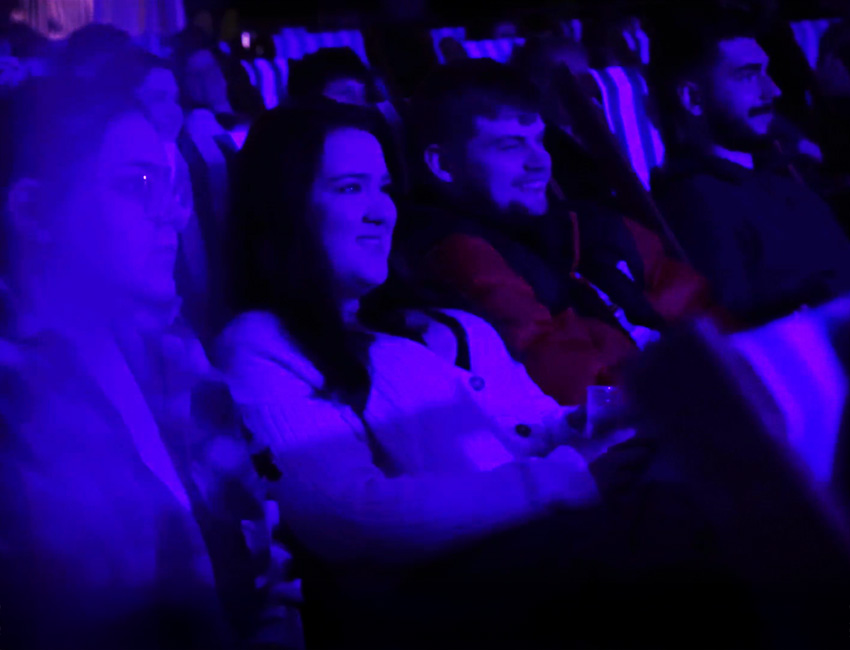
You will also have the opportunity to develop your understanding by taking part in class trips, such as immersing yourself in a virtual reality gaming arcade or going behind the scenes at a local festival. There will also be master classes from industry professionals, screenings and trips to widen your learning throughout the course.
Some modules will be delivered through workshops which are designed to help you develop transferable skills, digital literacy and strategic career plans. This might include working on professional social networking through LinkedIn, industry-standard blogging platforms such as WordPress or creating content for TikTok.
Meet our Media and Filmmaking Lecturers
John Bradburn
John has directed over 20 music videos for bands from all over the world. His work has been seen in The Melbourne International Film Festival, Seattle International Film Festival and West County Los Angeles. As a camera operator he has worked for the BBC and for a wide variety of corporate and commercial clients.
Holly Barnes-Bennetts
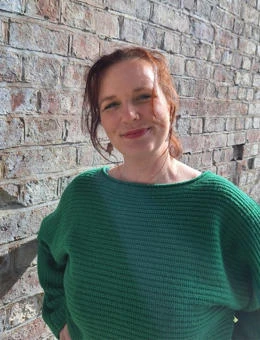
Holly completed a her BA Hons Media with Cultural Studies at Southampton Solent University in 2006. After finishing her degree she gained employment ranging from running music and arts festivals, working in PR and charity fundraising. She then returned to teaching, securing a Diploma to Teach in the Lifelong Learning Sector (University of Warwick) and completing a Masters by Research from Bournemouth University. Currently, Holly is working towards her PhD at the University of Worcester titled: A Digital Interactionist, Praxis Study of Perception and Communication of Positive Sexual Consent.
Reuben Irving
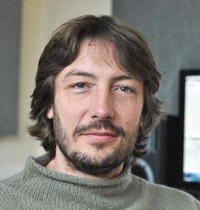
Reuben has worked as a freelance editor for over 10 years producing work for cinema, TV, web and mobile content, and live theatre/dance performance. His most recent project as editor was the feature film How To Be. He has always had an interest in experimenting with form, content and technology.
Dr Mikel Koven
Dr Mikel J Koven is a senior lecturer in Media & Film Studies. His teaching areas include World cinema; genre; Hollywood cinema; horror cinema; film & folklore; and cult & exploitation cinema.
His research areas include Film & Folklore (fairy tales, myths, and legends); Exploitation cinema (with a focus on Italian horror film); Jewish cinema (representations, stereotypes, and the Holocaust); and “Cult” TV.
John Bradburn
John has directed over 20 music videos for bands from all over the world. His work has been seen in The Melbourne International Film Festival, Seattle International Film Festival and West County Los Angeles. As a camera operator he has worked for the BBC and for a wide variety of corporate and commercial clients.
Holly Barnes-Bennetts
Holly completed a her BA Hons Media with Cultural Studies at Southampton Solent University in 2006. After finishing her degree she gained employment ranging from running music and arts festivals, working in PR and charity fundraising. She then returned to teaching, securing a Diploma to Teach in the Lifelong Learning Sector (University of Warwick) and completing a Masters by Research from Bournemouth University. Currently, Holly is working towards her PhD at the University of Worcester titled: A Digital Interactionist, Praxis Study of Perception and Communication of Positive Sexual Consent.
Entry requirements
UCAS tariff points required: 104
| Qualification | Grade |
|---|---|
| A-level | BCC |
| BTEC National Extended Diploma | DMM |
| T-level | M |
We do accept Access to HE Diplomas and other qualifications which may not exactly match the combinations above. Work out your estimated points with the UCAS tariff calculator.
Any questions?
If you have any questions about entry requirements, please call our Admissions Office on 01905 855111 or email admissions@worc.ac.uk.
Fees
Fees contents
UK and EU students
The standard fee for full-time home and EU undergraduate students on BA/BSc/LLB degrees and FdA/FdSc degrees in the academic year 2027/28 is £10,050 per year.
Tuition fees are reviewed annually and may increase each year for both new and continuing students.
For more details on course fees, please visit our course fees page.
International students
The standard tuition fee for full-time international students enrolling on BA/BSc/LLB degrees and FdA/FdSc degrees in the academic year 2027/28 is £17,700 per year.
Tuition fees are reviewed annually and may increase each year for both new and continuing students.
For more details on course fees, please visit our course fees page.
How to apply
How to apply contents
Applying through UCAS
UCAS is the central organisation through which applications are processed for full-time undergraduate courses in the UK.
Read our how to apply pages for more information on the application process, or if you’d like to apply for part-time study.
Contact
If you have any questions, please get in touch. We're here to help you every step of the way.

Dr Katy Wareham Morris
Senior Lecturer in Media & Film Studies; Course Leader for Media & Culture; Head of Department for English, Media and Culture
k.wareham.morris@worc.ac.ukAdmissions Office
admissions@worc.ac.uk01905 855111More to explore
Open Days
Visiting us is the best way to get a feel for student life at the University of Worcester.
The City of Worcester
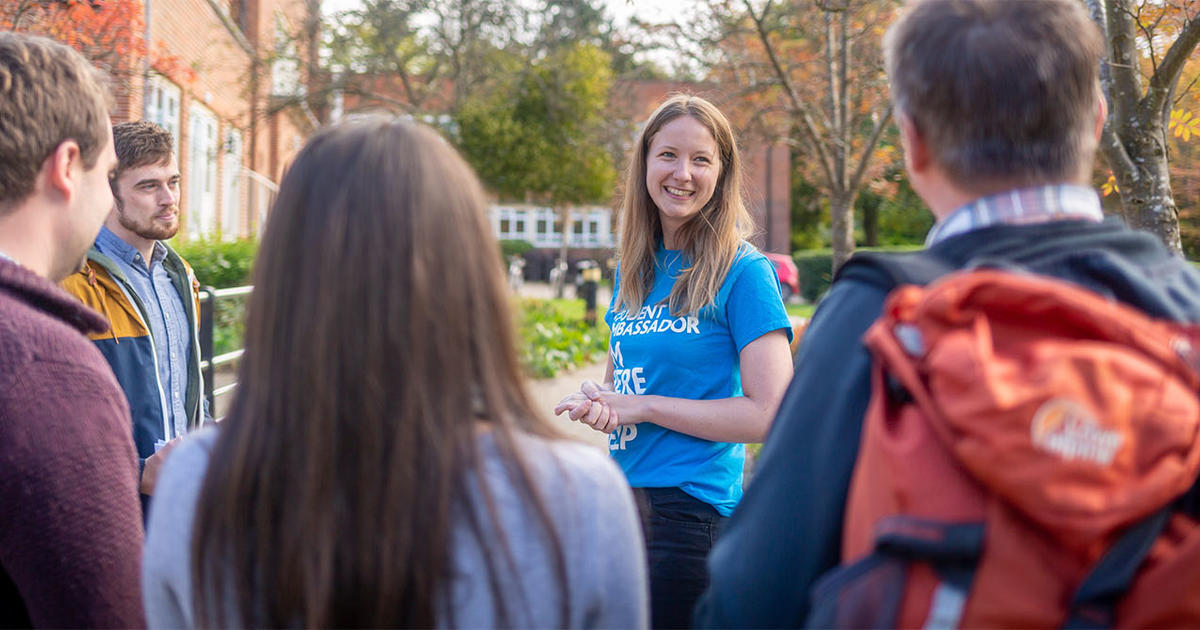
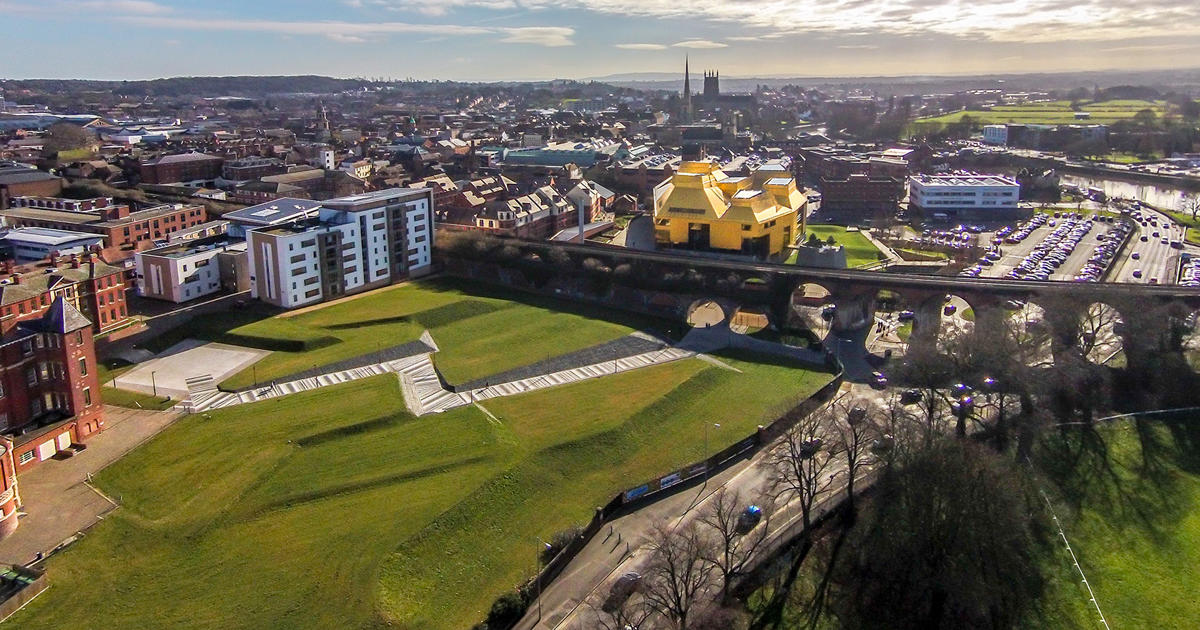
Worcester is a welcoming university city with great transport links and plenty of student parking.
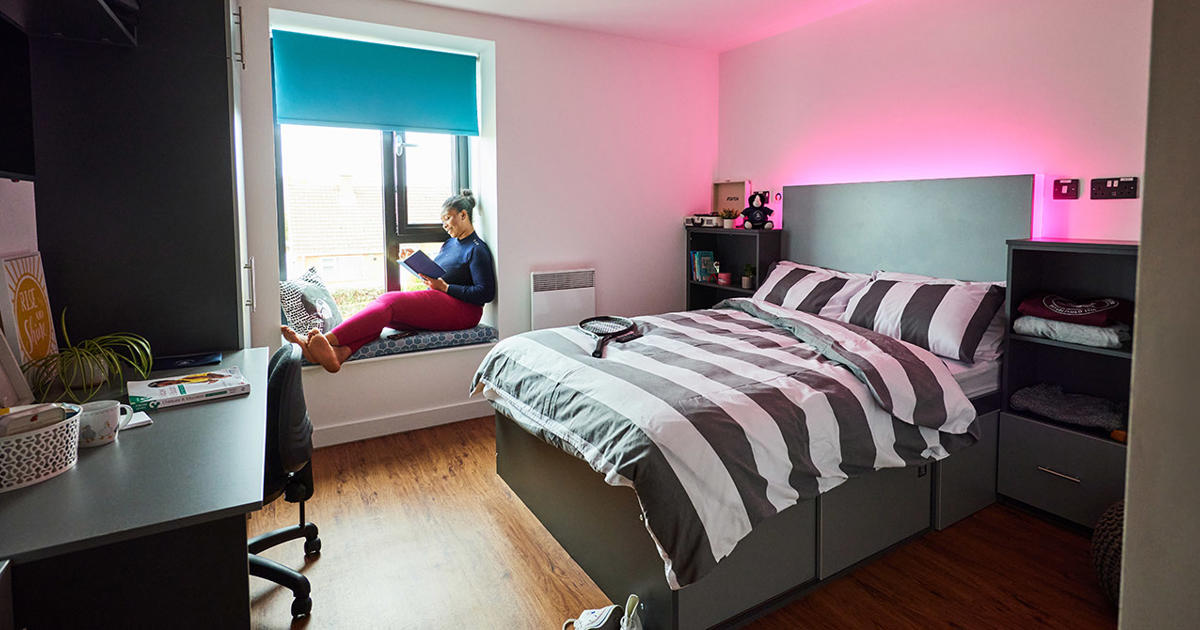
Accommodation
Benefit from our accommodation guarantee. We have rooms on campus to suit every budget including en-suite options.