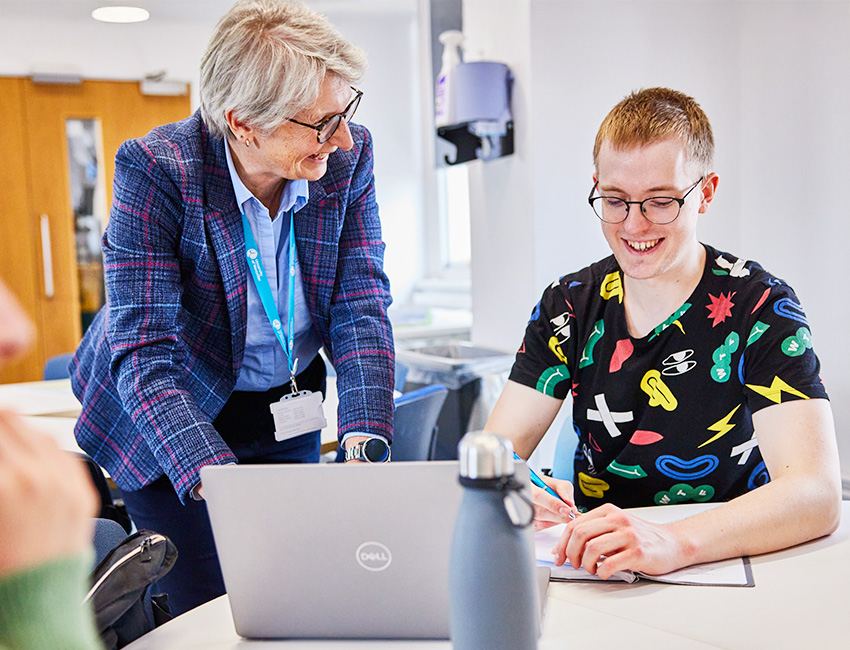
At Worcester you’ll get involved with hands-on projects, interactive lessons and have the opportunity to learn how to teach English as a foreign language. You’ll be studying in a historic city with access to archives and local arts organisations, supporting both your studies and gaining work experience.
Our Communications and Media courses are top in the UK for teaching quality
our English courses are ranked in the Top 20 for graduate prospects
Overview
Language is a key part of how we communicate, interact with each other and understand the social, historical and political context which surrounds us in our daily lives. Through discovering the origin of the English language, exploring the meaning behind tone, words and grammar, you’ll have the background knowledge needed to understand how language is used and understood today.
Use of language is also central to media and film, as this industry is about how we communicate messages and ideas to each other both on a local and globalised scale. A deep understanding of language and linguistics is needed to know how to successfully connect with audiences and convey intentions behind the content being shared.
Through studying English Language you’ll examine how speech, text, and media reflect identity and explore the theories and debates surrounding how language and media interact with social factors such as class, gender, age, and ethnicity.
You will be introduced to leading innovators in the media, technology and creative industries. Through guest speakers and placement opportunities you’ll have the opportunity learn from professionals within digital marketing, content creation, cultural and heritage event industries and more. You’ll also learn about global screen cultures such as crime, sci-fi, horror, kawaii, manga and romance, and how production and distribution processes are adapted to the ways these forms of media are consumed by global audiences.
Work placement
In your second year, you’ll have the opportunity to apply the skills you’ve developed in a professional setting, through our work placement module. You’ll be supported in finding a placement which matches your goals through creating a personal development plan, producing a CV, and learning how to approach employers.
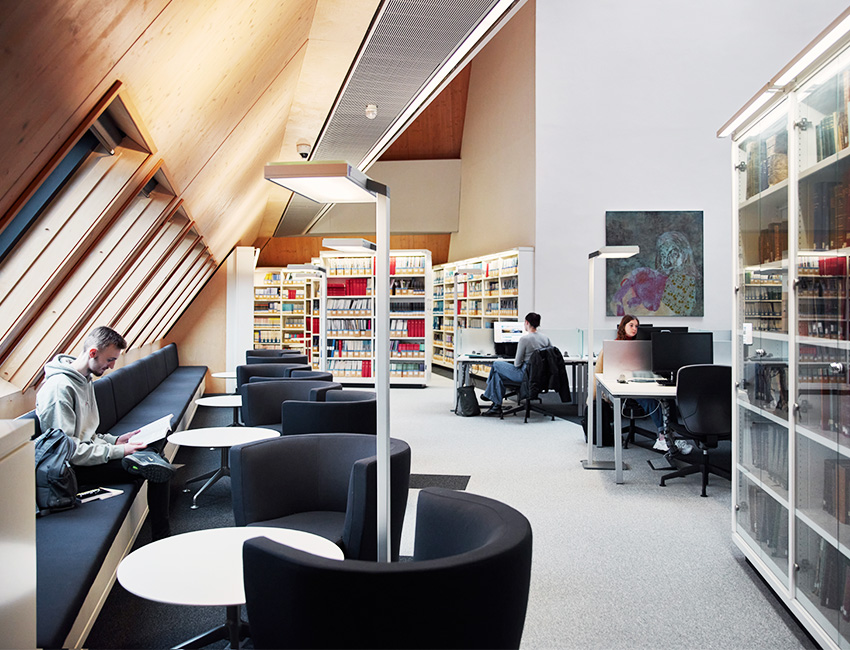
Placements are flexible, with around 36 hours spread over 12 weeks to fit alongside your studies. Placement opportunities are designed to help you gain experience, build confidence, and explore your career options. Past placements have included schools, marketing agencies, arts and heritage organisations, and the Hive Library.
Course content
In your first year you’ll focus on gaining a general understanding of linguistics and media. You will also develop your understanding of language by learning how to teach English to non-native speakers and working towards your Teaching English as a Foreign Language (TEFL) qualification. In your second and third year you’ll build on this knowledge and choose from our range of optional modules, to tailor the course to your interests and career goals.
Careers
Language and communication skills are highly transferable and sought after skills globally, and coupled with the critical and creative thinking skills you’ll have developed through this joint honours degree, you could step into a variety of industries, such as:
- Journalism
- Teaching
- Digital marketing and social media
- Public relations and local government
We have links with a variety of local employers, ranging from Severn Arts to BBC Hereford and Worcestershire, meaning you can benefit from work experience opportunities, speaking to working professionals, meeting some of our alumni, and having the opportunity to study abroad. These experiences will increase your knowledge of the various roles available to you.
Our Careers and Employability service are also on hand to provide advice and support in taking the steps needed to progress onto the career path best suited to you. They offer career planning sessions, workshops, CV and cover letter advice and more, during your studies and after you graduate.
Further study
Many of our graduates go onto to study on one of our postgraduate courses, which include our range of PGCE courses for progressing into teaching. You could also progress onto our Education and Humanities courses.
Course highlights
Teaching and assessment
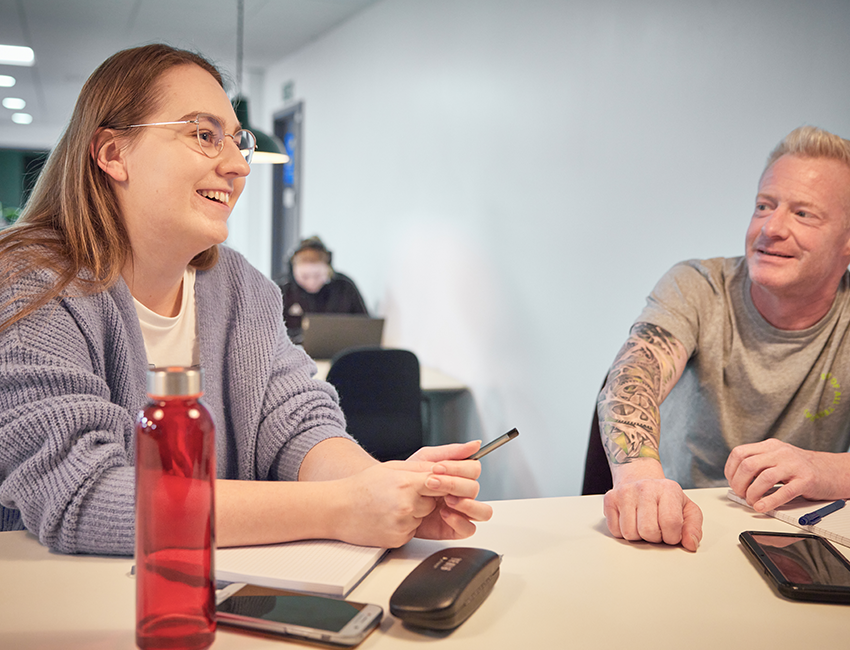
You’ll learn through a mix of lectures where you’ll learn the key points and theories which you’ll discover in more detail through your independent study. Seminars will be used to discuss topics with your peers, and you’ll apply your learning practically through a variety of workshops and learn through giving and receiving feedback to your classmates.
Teaching and assessment contents
You are taught through a combination of, lectures, seminars, practical tasks etc. Lectures provide an overview of key points on a topic presented in a concise and coherent way. Seminars enable the discussion and development of understanding of the topics covered in lectures, and practical tasks are focused on developing subject specific skills (such as interview recording or data transcription).
You will be taught through a combination of interactive lectures, seminars and workshops. You will also have the opportunity to develop your understanding by taking part in class trips, such as immersing yourself in a virtual reality gaming arcade or going behind the scenes at a local festival. You will also be invited to our course events which include exclusive film screenings and guest speakers.
You will develop your understanding of key concepts and theoretical ideas through discussion and debate with your lecturers and peers. We do not shy away from controversial topics, especially as they are often misrepresented in the media and films, but we pride ourselves on creating a safe, inclusive and respectful space where you'll feel supported and confident in sharing your thoughts.
We will teach you critical concepts and ideas from a variety of theoretical frameworks including black histories, intersectional feminisms and queer approaches, which will enable you to decode the media.
Some modules will be delivered through workshops which are designed to help you develop transferable skills, digital literacy and strategic career plans. This might include working on professional social networking through LinkedIn, industry-standard blogging platforms such as WordPress or creating content for TikTok.
Meet our English Language, Media and Film Studies lecturers
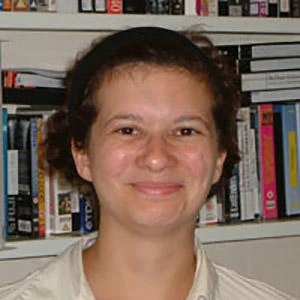
Dr Barbara Mitra
Dr Barbara Mitra is a Principal Lecturer in Media & Film Studies. She has varied teaching and research interests and has published on issues relating to television, gender, advertising and children, and has become interested in social media, body image and eating disorders.
Barbara's teaching includes specialist modules on gender and commercial issues of social media and she is also interested in the use of technology in relation to learning and teaching. She has spoken on local radio and schools on issues related to gender and body image, Facebook and television advertising and children. She has also made a number of films on various academic topics.
Barbara welcomes PhD and MRes topics in relation to the broad areas of gender, social media, body images and digital cultures.
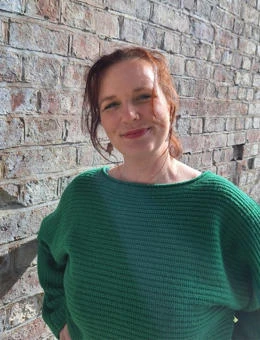
Holly Barnes-Bennetts
Holly completed a her BA Hons Media with Cultural Studies at Southampton Solent University in 2006. After finishing her degree she gained employment ranging from running music and arts festivals, working in PR and charity fundraising. She then returned to teaching, securing a Diploma to Teach in the Lifelong Learning Sector (University of Warwick) and completing a Masters by Research from Bournemouth University. Currently, Holly is working towards her PhD at the University of Worcester titled: A Digital Interactionist, Praxis Study of Perception and Communication of Positive Sexual Consent.
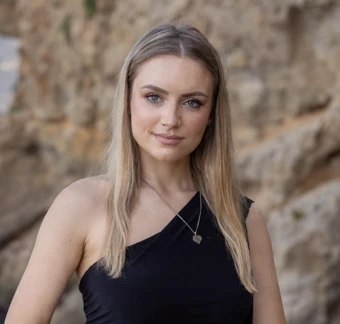
Dr Katie Mansfield
I'm interested in how language shapes our everyday lives, from how we talk with friends, to how children are assessed in school, to how people are judged in wider society. In my teaching and research, I focus particularly on how language and social class interact, and how this can create or reinforce inequalities in education. A lot of my work looks at what happens in real-life classrooms and playgrounds - how children use language, how teachers respond to it, and how current education policy in England shapes ideas about what counts as 'good' or 'correct' language.
I'm passionate about helping students understand that language is not just a set of fixed rules, but a powerful social tool that affects identity, opportunity, and fairness. I am particularly committed to widening participation and inclusive teaching, and I aim to create a learning environment that is supportive, engaging and rooted in real-world, cutting edge data and examples.
Dr Mikel Koven
Dr Mikel J Koven is a senior lecturer in Media & Film Studies. His teaching areas include World cinema; genre; Hollywood cinema; horror cinema; film & folklore; and cult & exploitation cinema.
His research areas include Film & Folklore (fairy tales, myths, and legends); Exploitation cinema (with a focus on Italian horror film); Jewish cinema (representations, stereotypes, and the Holocaust); and “Cult” TV.
Dr Barbara Mitra
Dr Barbara Mitra is a Principal Lecturer in Media & Film Studies. She has varied teaching and research interests and has published on issues relating to television, gender, advertising and children, and has become interested in social media, body image and eating disorders.
Barbara's teaching includes specialist modules on gender and commercial issues of social media and she is also interested in the use of technology in relation to learning and teaching. She has spoken on local radio and schools on issues related to gender and body image, Facebook and television advertising and children. She has also made a number of films on various academic topics.
Barbara welcomes PhD and MRes topics in relation to the broad areas of gender, social media, body images and digital cultures.
Holly Barnes-Bennetts
Holly completed a her BA Hons Media with Cultural Studies at Southampton Solent University in 2006. After finishing her degree she gained employment ranging from running music and arts festivals, working in PR and charity fundraising. She then returned to teaching, securing a Diploma to Teach in the Lifelong Learning Sector (University of Warwick) and completing a Masters by Research from Bournemouth University. Currently, Holly is working towards her PhD at the University of Worcester titled: A Digital Interactionist, Praxis Study of Perception and Communication of Positive Sexual Consent.
Entry requirements
UCAS tariff points required: 104
| Qualification | Grade |
|---|---|
| A-level | BCC |
| BTEC National Extended Diploma | DMM |
| T-level | Merit |
We do accept Access to HE Diplomas and other qualifications which may not exactly match the combinations above. Work out your estimated points with the UCAS tariff calculator.
Any questions?
If you have any questions about entry requirements, please call our Admissions Office on 01905 855111 or email admissions@worc.ac.uk.
Fees
Fees contents
UK and EU students
The standard fee for full-time home and EU undergraduate students on BA/BSc/LLB degrees and FdA/FdSc degrees in the academic year 2027/28 is £10,050 per year.
Tuition fees are reviewed annually and may increase each year for both new and continuing students.
For more details on course fees, please visit our course fees page.
International students
The standard tuition fee for full-time international students enrolling on BA/BSc/LLB degrees and FdA/FdSc degrees in the academic year 2027/28 is £17,700 per year.
Tuition fees are reviewed annually and may increase each year for both new and continuing students.
For more details on course fees, please visit our course fees page.
How to apply
How to apply contents
Applying through UCAS
UCAS is the central organisation through which applications are processed for full-time undergraduate courses in the UK.
Read our how to apply pages for more information on the application process, or if you’d like to apply for part-time study.
English Language and Media & Film Studies BA (Hons) - PQ34
Contact
If you have any questions, please get in touch. We're here to help you every step of the way.
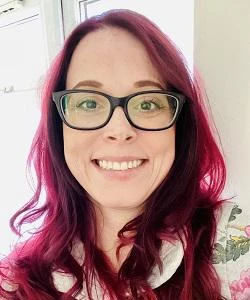
Dr Katy Wareham Morris
Senior Lecturer in Media & Film Studies; Course Leader for Media & Culture; Head of Department for English, Media and Culture
k.wareham.morris@worc.ac.ukAdmissions Office
admissions@worc.ac.uk01905 855111More to explore
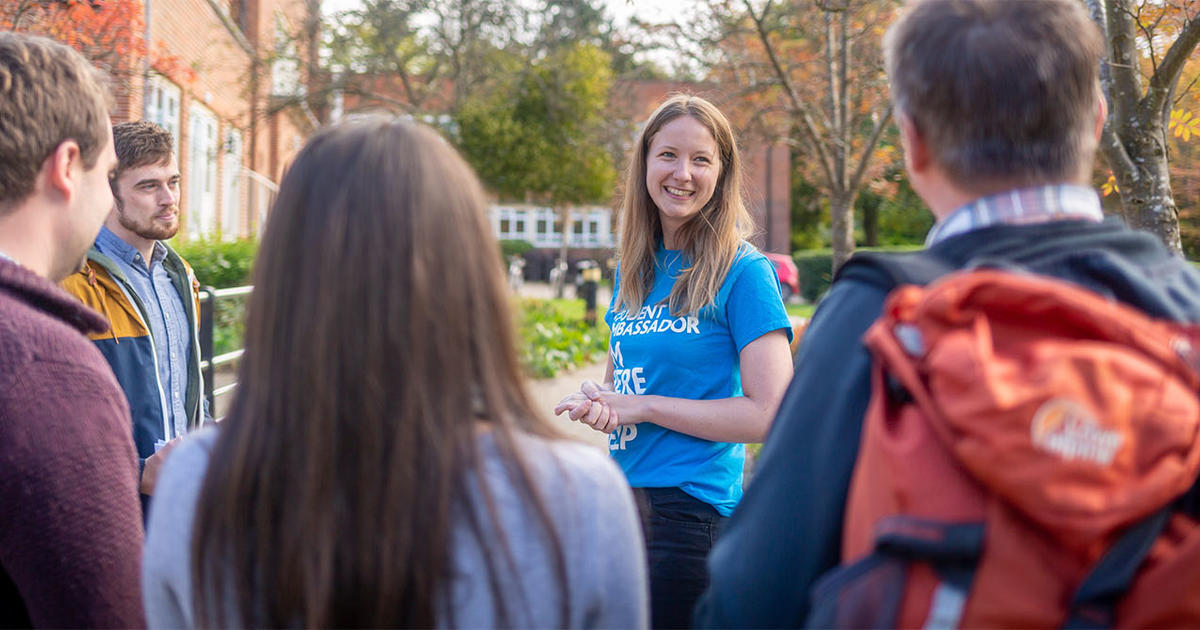
Open Days
Visiting us is the best way to get a feel for student life at the University of Worcester.
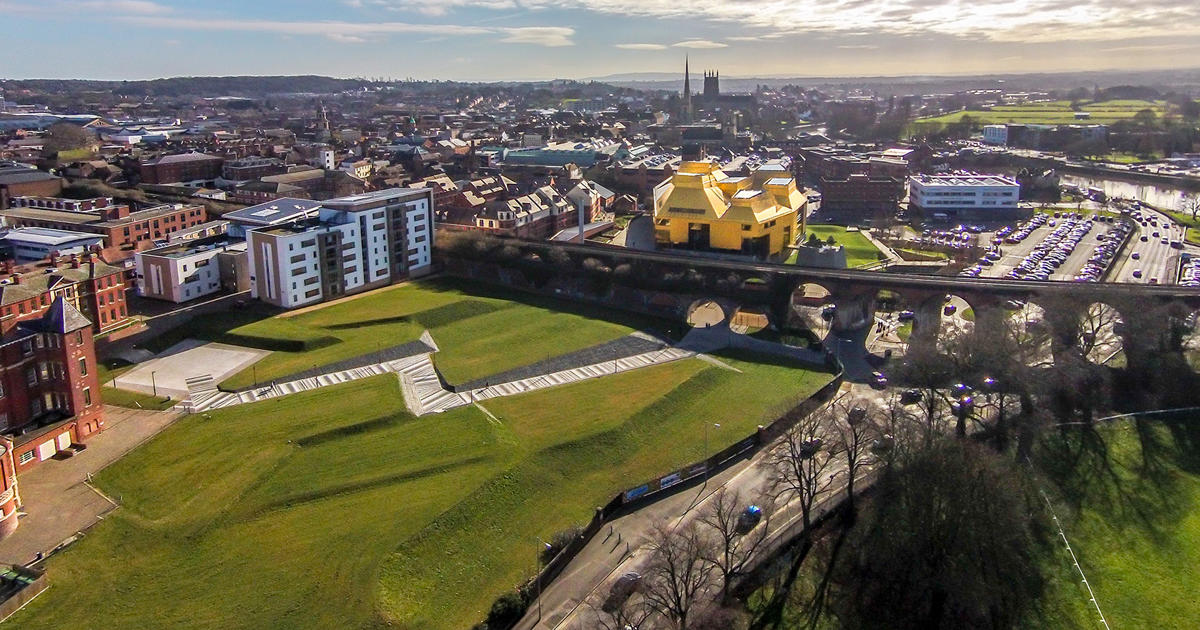
The City of Worcester
Worcester is a welcoming university city with great transport links and plenty of student parking.
Accommodation
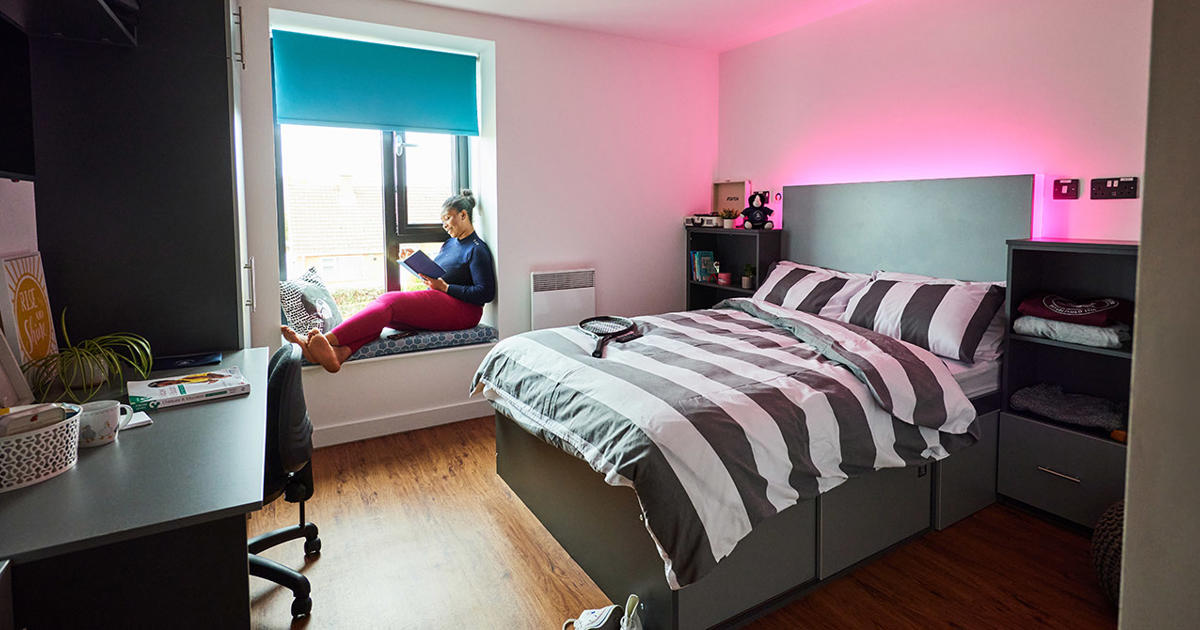
Benefit from our accommodation guarantee. We have rooms on campus to suit every budget including en-suite options.