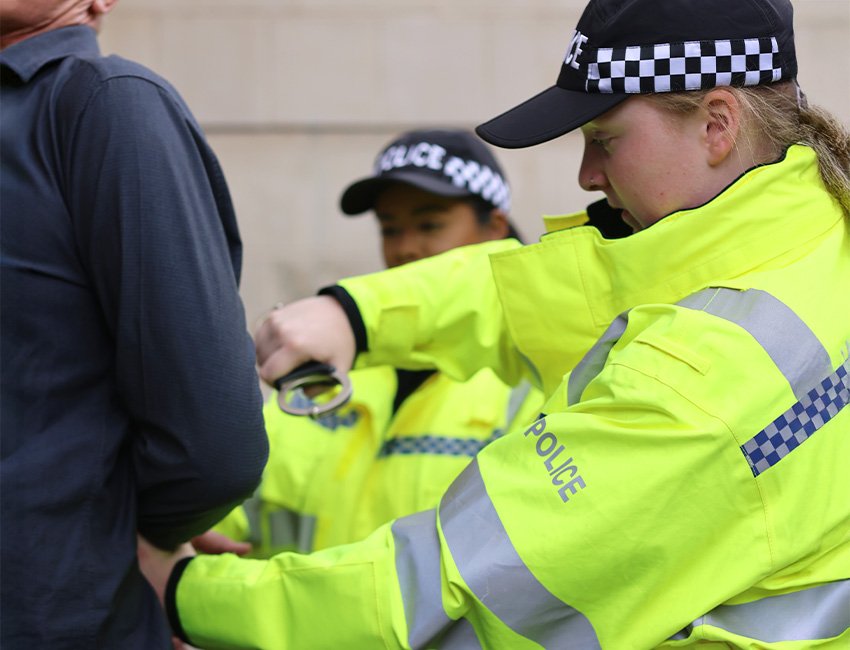
At Worcester, you’ll get plenty of real experience from the start by taking part in practical activities like moots, mock trials and pro bono projects. You’ll build your confidence, strengthen your legal skills, and see how the justice system works in real life.
of students are in work and/or study 15 months after graduating
of students say staff are good at explaining things
Overview
On the Law with Forensic Psychology LLB (Hons), you’ll explore how the law deals with crime, evidence and justice, while also asking a deeper question: why do people offend? You’ll build a strong grounding in core areas of law, such as criminal law, contract law and public law, alongside key ideas in forensic psychology. You’ll look at criminal behaviour, the reliability of witness memory, investigation techniques, victim experiences, and rehabilitation, and then apply what you learn to real and mock cases.
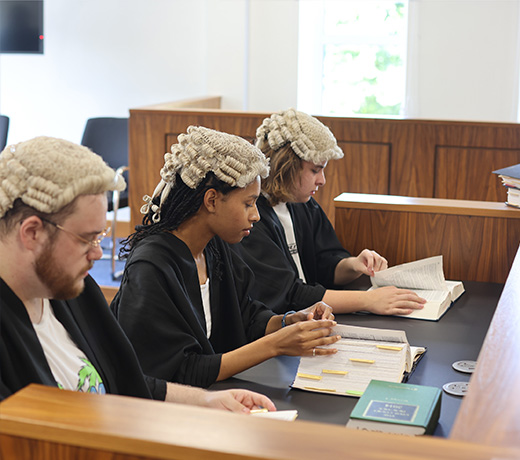
Learn to think and act like a lawyer by practicing advocacy, negotiation, client interviewing and legal research. You’ll work in our purpose-built courtroom with moots, mock trials and client interviewing practices to build your comfort and confidence in working in an authentic legal setting.
Throughout the course, you’ll be taught by staff who draw on their experience of legal work and forensic practice. You will benefit from small class sizes and a friendly, supportive team. By the time you graduate, you’ll be ready for further training for the Solicitors Qualifying Examination (SQE), bar training, or other graduate careers that need confident, analytical and socially aware law graduates.
Placements
Pro bono activity is a significant part of our extra-curricular offerings, including through our Legal Advice Clinic, giving you the chance to work alongside practising solicitors and develop your legal skills while making a genuinely positive contribution to society.
You can also choose to complete an optional work-based placement in your third year, at an approved legal organisation such as a solicitor’s firm, a barrister’s chambers, or local government.
Discover Law at Worcester
Upcoming events
Course content
In your first two years, you’ll focus on the foundations of legal study and key psychological principles. By your final year, you’ll have a choice of optional modules to explore specialist areas like family law, medical law, or a work-based placement. This structure will give you a solid grounding while letting you shape your degree around the career path you want.
Careers
By studying Law with Forensic Psychology, you’ll build the skills and experience that employers look for across the legal and criminal justice sectors.
You’ll have lots of opportunities to gain real experience, including volunteering, mentoring schemes and placements with local organisations. You can get involved in pro bono work, support real clients through our Legal Advice Clinic, and take part in mock trials and courtroom activities that build your confidence in legal settings. These experiences help you understand how the law works in practice and show future employers that you’re ready for professional responsibility.
We work with local, regional, and national employers and their feedback helps shape what you learn on the course. This means your degree stays current and gives you the skills you need for today’s legal and criminal justice careers. You’ll also explore careers beyond law, including roles in business, management, and public service.
Graduates from this course have gone into roles such as:
- Solicitor
- Barrister
- Legal assistant
- Probation officer
- Police officer
- Youth justice worker
- Victim support worker
- Criminal intelligence officer
- Community safety advisor
- HR officer
- Business manager
Opportunities to progress on to a postgraduate qualification at Worcester include our Legal Practice LLM and Law MPhil/PhD
Student case studies
Find out more about some recent Law with Forensic Psychology LLB students.

Emily Andrew
Emily Andrew, a Law student whose dreams of becoming a barrister are a step closer after she won a highly coveted legal training place, has graduated.
Emily, who studied Law with Forensic Psychology, has studied the Barrister Training Course (BTC) and Master of Laws at BPP University Law School, in Birmingham. Following that, she commenced pupillage (the paid training period required to fully qualify as a barrister) with the Crown Prosecution Service in September 2023. “To gain pupillage before commencing the BTC, when it has only a 7 per cent success rate for BTC graduates per year, is one of my proudest achievements, and something I would not have been capable of achieving without the unmatched support from the University of Worcester,” she said.
“The support from Worcester is unmatched,” she said. “From the very beginning of my studies, the staff team were supporting us every step of the way. I never felt like I was bothering anyone with questions or queries. The staff knew the students by name, and this small touch makes the team so much more approachable, and certainly made a massive difference to me. I also found the careers team to be hugely supportive and encouraging."
Emily Andrew
Emily Andrew, a Law student whose dreams of becoming a barrister are a step closer after she won a highly coveted legal training place, has graduated.
Emily, who studied Law with Forensic Psychology, has studied the Barrister Training Course (BTC) and Master of Laws at BPP University Law School, in Birmingham. Following that, she commenced pupillage (the paid training period required to fully qualify as a barrister) with the Crown Prosecution Service in September 2023. “To gain pupillage before commencing the BTC, when it has only a 7 per cent success rate for BTC graduates per year, is one of my proudest achievements, and something I would not have been capable of achieving without the unmatched support from the University of Worcester,” she said.
“The support from Worcester is unmatched,” she said. “From the very beginning of my studies, the staff team were supporting us every step of the way. I never felt like I was bothering anyone with questions or queries. The staff knew the students by name, and this small touch makes the team so much more approachable, and certainly made a massive difference to me. I also found the careers team to be hugely supportive and encouraging."
Emily Andrew
Emily Andrew, a Law student whose dreams of becoming a barrister are a step closer after she won a highly coveted legal training place, has graduated.
Emily, who studied Law with Forensic Psychology, has studied the Barrister Training Course (BTC) and Master of Laws at BPP University Law School, in Birmingham. Following that, she commenced pupillage (the paid training period required to fully qualify as a barrister) with the Crown Prosecution Service in September 2023. “To gain pupillage before commencing the BTC, when it has only a 7 per cent success rate for BTC graduates per year, is one of my proudest achievements, and something I would not have been capable of achieving without the unmatched support from the University of Worcester,” she said.
“The support from Worcester is unmatched,” she said. “From the very beginning of my studies, the staff team were supporting us every step of the way. I never felt like I was bothering anyone with questions or queries. The staff knew the students by name, and this small touch makes the team so much more approachable, and certainly made a massive difference to me. I also found the careers team to be hugely supportive and encouraging."
Course highlights


Teaching and assessment
This course is taught through a mix of interactive lectures, seminars, workshops and hands-on activities. Evaluation is not all about written assignments and exams. Depending on your modules, you might complete essays, reports, presentations, moots, courtroom exercises, case studies, or work-based tasks.
Teaching and assessment contents
You are taught through a combination of interactive lectures, seminars, workshops and practical courtroom exercises. Interactive lecture sessions take a variety of formats and are intended to enable the application of learning through discussion and small group activities. Seminars enable the discussion and development of understanding of topics covered in lectures, and wider activities – such as those within the mock courtroom – are focused on developing subject specific skills and graduate skills.
In addition, meetings with Personal Academic Tutors are scheduled on at least four occasions in the first year and three occasions in each of the other years of a course.
The University places emphasis on enabling students to develop the independent learning capabilities that will equip them for lifelong learning and future employment, as well as academic achievement. A mixture of independent study, teaching and academic support from Student Services and Library Services, and also the Personal Academic Tutoring system enables students to reflect on progress and build up a profile of skills, achievements and experiences that will help them to flourish and be successful.
Entry requirements
UCAS tariff points required: 120
| Qualification | Grade |
|---|---|
| A-level | BBB |
| BTEC National Extended Diploma | DDM |
| T-level | Merit |
We do accept Access to HE Diplomas and other qualifications which may not exactly match the combinations above. Work out your estimated points with the UCAS tariff calculator.
Any questions?
If you have any questions about entry requirements, please call our Admissions Office on 01905 855111 or email admissions@worc.ac.uk.
Fees
Fees contents
UK and EU students
The standard fee for full-time home and EU undergraduate students on BA/BSc/LLB degrees and FdA/FdSc degrees in the academic year 2027/28 is £10,050 per year.
Tuition fees are reviewed annually and may increase each year for both new and continuing students.
For more details on course fees, please visit our course fees page.
International students
The standard tuition fee for full-time international students enrolling on BA/BSc/LLB degrees and FdA/FdSc degrees in the academic year 2027/28 is £17,700 per year.
Tuition fees are reviewed annually and may increase each year for both new and continuing students.
For more details on course fees, please visit our course fees page.
How to apply
How to apply contents
Applying through UCAS
UCAS is the central organisation through which applications are processed for full-time undergraduate courses in the UK.
Read our how to apply pages for more information on the application process, or if you’d like to apply for part-time study.
Law with Forensic Psychology LLB (Hons) - M10C
Contact
If you have any questions, please get in touch. We're here to help you every step of the way.


Admissions Office
admissions@worc.ac.uk01905 855111More to explore
Open Days
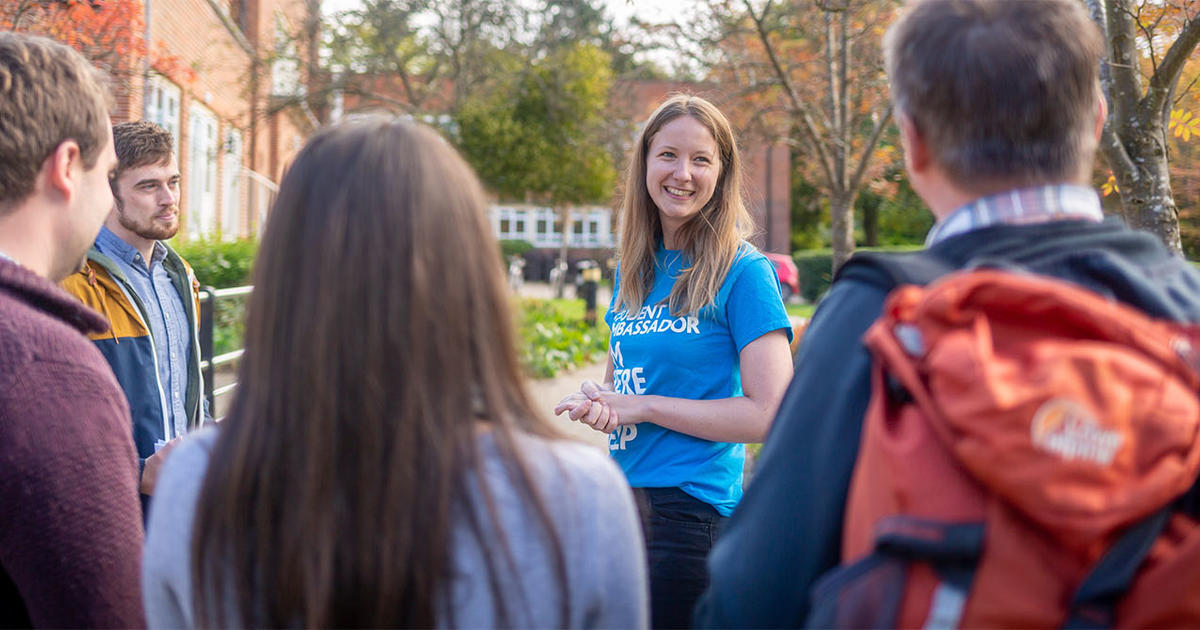
Visiting us is the best way to get a feel for student life at the University of Worcester.
The City of Worcester
Worcester is a welcoming university city with great transport links and plenty of student parking.

Accommodation
Benefit from our accommodation guarantee. We have rooms on campus to suit every budget including en-suite options.