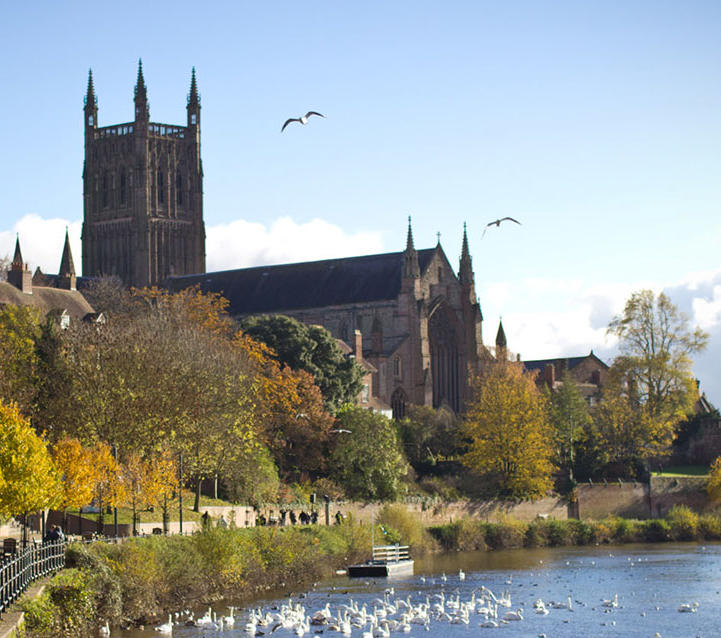
At Worcester, you’ll study in a historic cathedral city where there are plenty of opportunities to work with museums, archives and local media organisations, helping you build practical experience beyond the classroom.
of graduates go on to work or further study after 15 months
of students say this course is intellectually stimulating
Overview
History gives you the chance to explore people, places, and idea across the centuries. You’ll learn how to analyse different sources, understand different viewpoints, and make sense of why events happened the way they did. Journalism builds on this by helping you turn research into powerful stories that people can connect with.
Most of your learning will take place in small group seminars, giving you the space to develop your ideas, test arguments and work closely with your classmates. History sessions are led by active researchers whose work shapes the field. In many cases, the books you’re studying were written by the people teaching you, and you’ll even get chances to contribute to their ongoing research. Journalism is taught by experienced professionals who’ve worked across news, magazines, broadcasting, PR and digital media. They offer 1‑1 tutorials alongside classroom sessions and will guide you through spotting, writing and pitching a story with confidence.
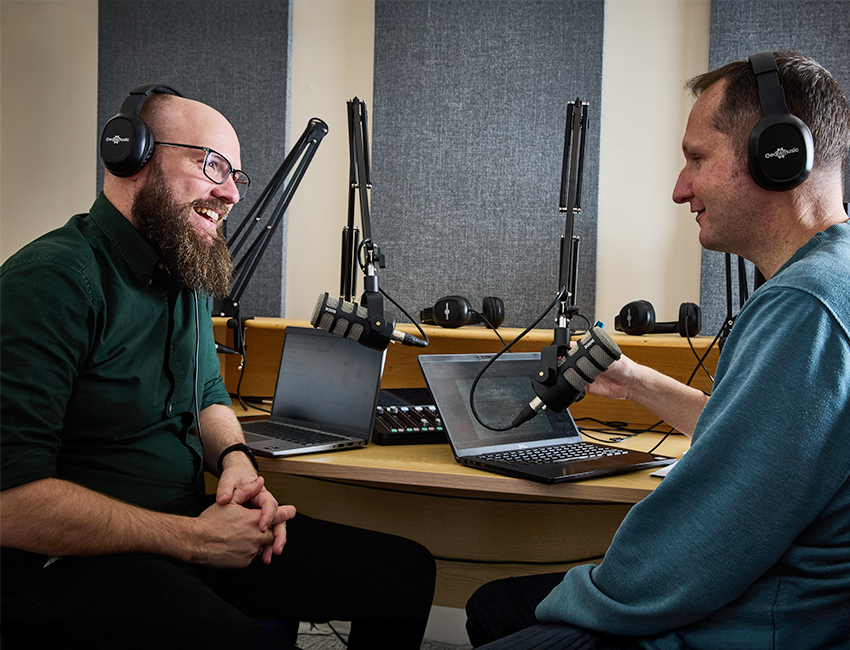
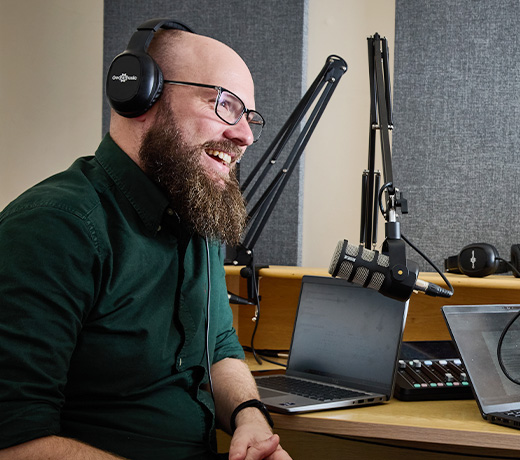
History seminars explore everything from the Tudor monarchy and early modern society to global conflict, political movements and cultural change. Journalism sessions take place in industry-standard studios and newsrooms, where you’ll learn interview techniques, fact‑checking, and how to create content for digital and print. Recording and editing audio or video, pitching ideas and working to deadlines are all part of everyday class activities, giving you a true feel for like in a modern media environment.
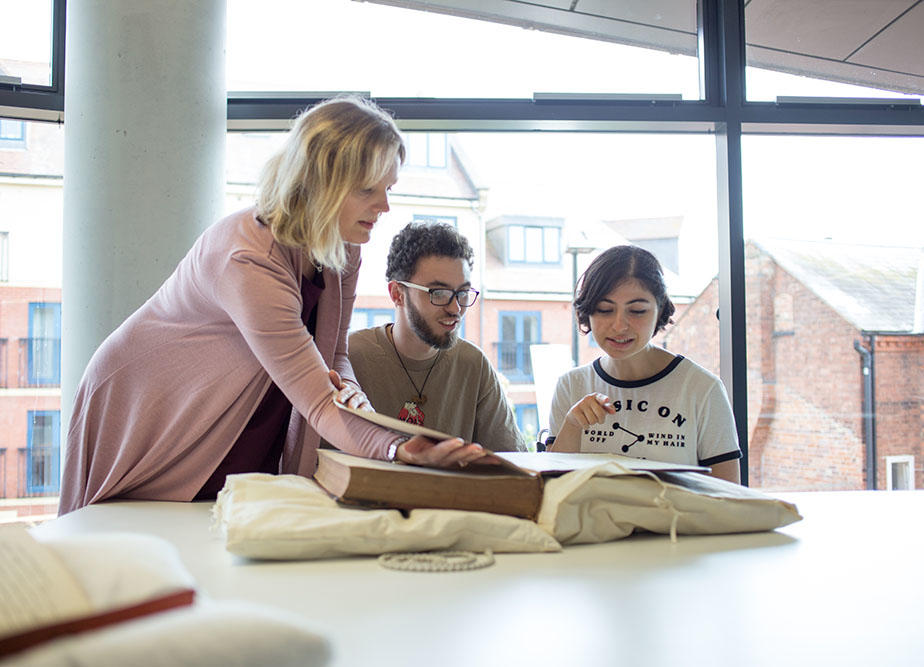
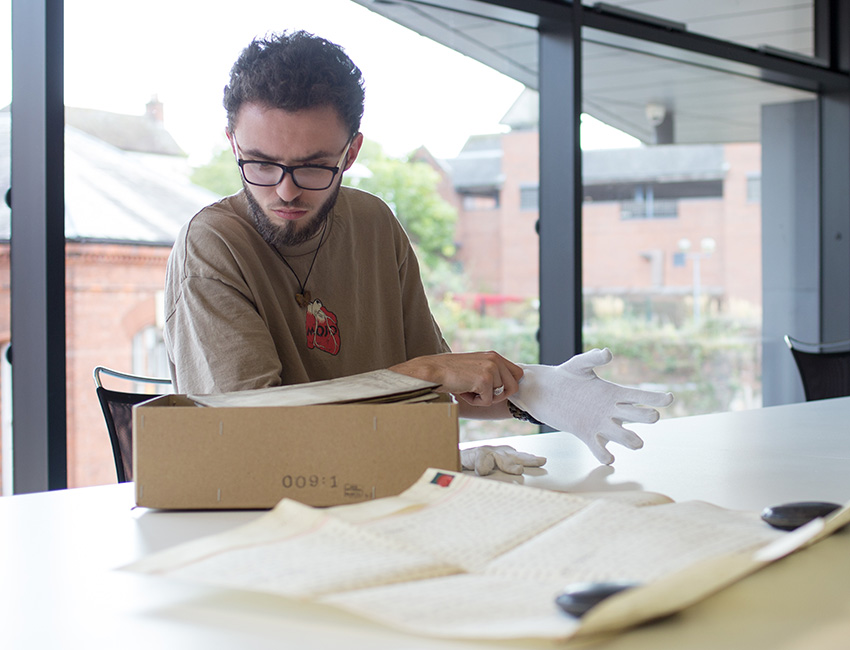
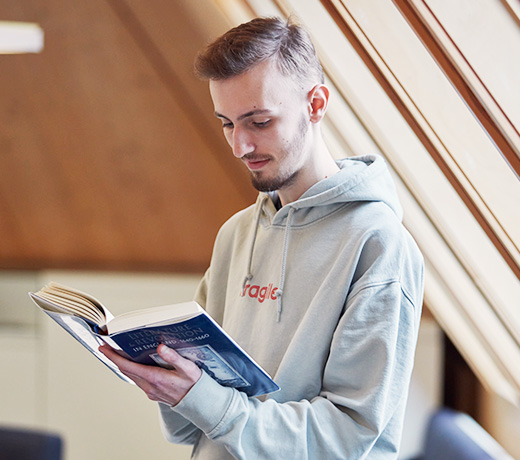
Access to the Hive library and its nationally significant archival collection brings historical research to life. Many students use these materials for projects, local investigations, and portfolio work, combining academic research with creative storytelling. Guest speakers, visiting journalists and local partners, including the BBC, regularly contribute to teaching, offering insight into how the skills you learn are used in the workplace.
Work experience
During your time at Worcester, you can choose a dedicated work experience module where you will have the opportunity to apply what you’ve learned in the workplace. History students often take part in placements or volunteering with local and regional heritage organisations such as museums, community groups, archives, or with the National Trust.
Journalism has strong links with media organisations, including the BBC and regional PR agencies. Placements offer a first-hand look at life in newsrooms, digital content teams and communications roles, helping you understand how stories are researched, produced and shared. Many students use these experiences to build a portfolio and develop professional networks.
Volunteering opportunities are regularly shared across both subjects, from local media projects to historical societies and community initiatives. Whether you're supporting a social media campaign, helping with oral‑history interviews or contributing to a newsroom, these activities help you grow your skills and discover what inspires you.
Course content
This joint honours degree lets you shape your studies around your interests and careers goals with a mix of mandatory and optional modules. You’ll explore the core skills of journalism and historical research, supported by lecturers who are active researchers and experienced journalists.
As you progress through the course, you’ll develop key skills – from strong research and writing skills to creating content in studio settings and working with original historical sources.
We regularly review our courses to reflect the latest research and developments in the subject area, as well as feedback from students, employers and the wider sector. As a result, modules may change to ensure the course remains current and relevant. Optional modules will run if enough students choose to study them. It is not guaranteed that all modules will be offered every year.
Careers
This course gives you a strong foundation for a career built on curiosity, clear communication and the ability to understand the stories that shape our world. You’ll learn how to research effectively, write clearly, communicate with different audiences and manage deadlines – all skills that employers look for in media, heritage, education, and many other sectors.
Work experience plays a significant role in helping you prepare for your future. You can choose a dedicated work experience module in your third year, allowing you to apply what you’ve learned in a professional setting. Many students gain experience with local and regional heritage organisations, museums, archives and community projects, while others build strong media portfolios through working with regional newsrooms and PR agencies. These opportunities help you grow your confidence, develop industry contacts, and discover what kind of work inspires you.
You could start a career as a:
- Journalist
- Media researcher
- Content creator
- PR officer
- Social media manager
- Museum curator
- Academic researcher
- Project officer
- Lawyer
- Local government officer
Opportunities to progress
Many of our graduates choose to continue their studies with a postgraduate qualification. Popular options include:
Course highlights

Teaching and assessment
Teaching is a mix of small seminars, hands-on workshops and practical newsrooms sessions, supported by one-to-one tutorials. You’ll learn through discussions, guided lecturers and studio-based activities that help you build confidence in researching, analysing and creating stories. Assessment focuses on real skills, from presentations and reviews to articles, digital content and project work.
Teaching and assessment contents
You’ll be taught through a combination of lectures, seminars, workshops, tutorials and directed learning. Journalism teaching also includes demonstrations, work simulations (newsdays), group and individual project work, supervised independent learning, e‑learning, production practice and work experience. Large and small group sessions are used across both subjects, with smaller groups especially common in workshops and skills‑based activities.
Lectures introduce you to key ideas, relevant historiography and learning materials, while seminars encourage discussion, critical investigation and the chance to test out your views. Sessions across both subjects are a mix of tutor‑led, student‑led and independent learning. You’ll develop your ability to research, analyse, and evaluate material, originate and develop ideas for editorial content, and explore the political, social, economic, legal, ethical and technological contexts that shape journalism and historical study.
You’ll use industry‑standard equipment and software for journalism throughout the course, with access to TV and radio studios. Staff are available throughout the semester for individual tutorials, and meetings with your Personal Academic Tutor are scheduled at least four times in your first year and three times in each subsequent year. Independent study, academic support, and the Personal Academic Tutoring system help you reflect on your progress and build a profile of skills and experiences for your future career.
Entry requirements
UCAS tariff points required: 104
| Qualification | Grade |
|---|---|
| A-level | BCC |
| BTEC National Extended Diploma | DMM |
| T-level | M |
We do accept Access to HE Diplomas and other qualifications which may not exactly match the combinations above. Work out your estimated points with the UCAS tariff calculator.
Any questions?
If you have any questions about entry requirements, please call our Admissions Office on 01905 855111 or email admissions@worc.ac.uk.
Fees
Fees contents
UK and EU students
The standard fee for full-time home and EU undergraduate students on BA/BSc/LLB degrees and FdA/FdSc degrees in the academic year 2027/28 is £10,050 per year.
Tuition fees are reviewed annually and may increase each year for both new and continuing students.
For more details on course fees, please visit our course fees page.
International students
The standard tuition fee for full-time international students enrolling on BA/BSc/LLB degrees and FdA/FdSc degrees in the academic year 2027/28 is £17,700 per year.
Tuition fees are reviewed annually and may increase each year for both new and continuing students.
For more details on course fees, please visit our course fees page.
How to apply
How to apply contents
Applying through UCAS
UCAS is the central organisation through which applications are processed for full-time undergraduate courses in the UK.
Read our how to apply pages for more information on the application process, or if you’d like to apply for part-time study.
History and Journalism BA (Hons) - 4Q23
Contact
If you have any questions, please get in touch. We're here to help you every step of the way.
Admissions Office
admissions@worc.ac.uk01905 855111More to explore
Open Days
Visiting us is the best way to get a feel for student life at the University of Worcester.
The City of Worcester
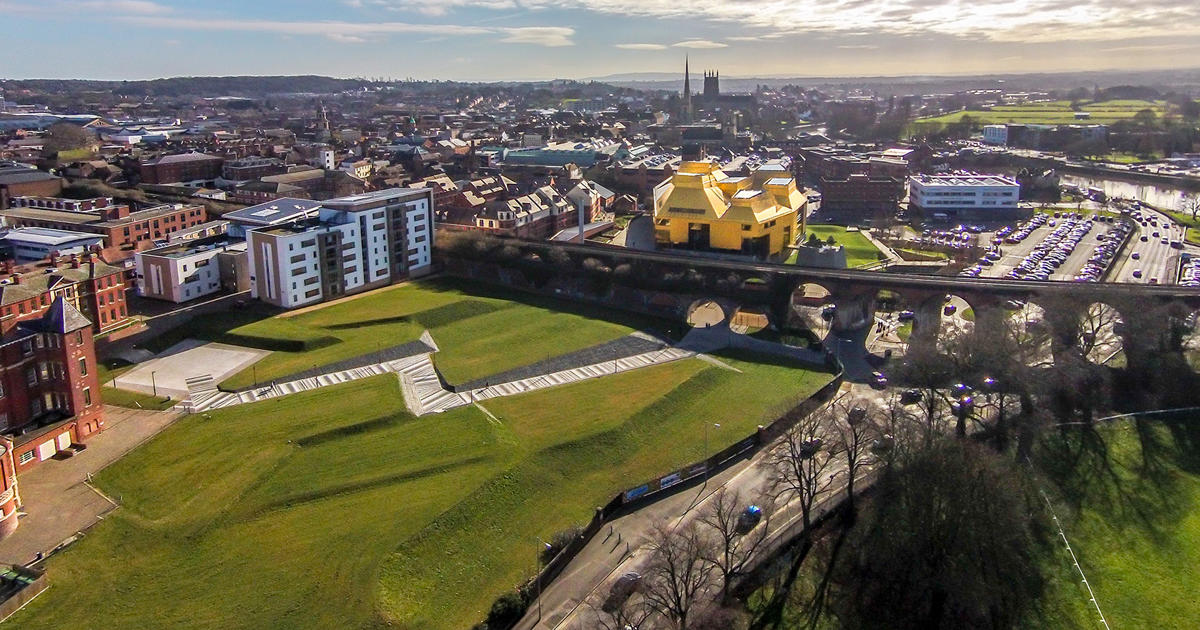
Worcester is a welcoming university city with great transport links and plenty of student parking.
Accommodation
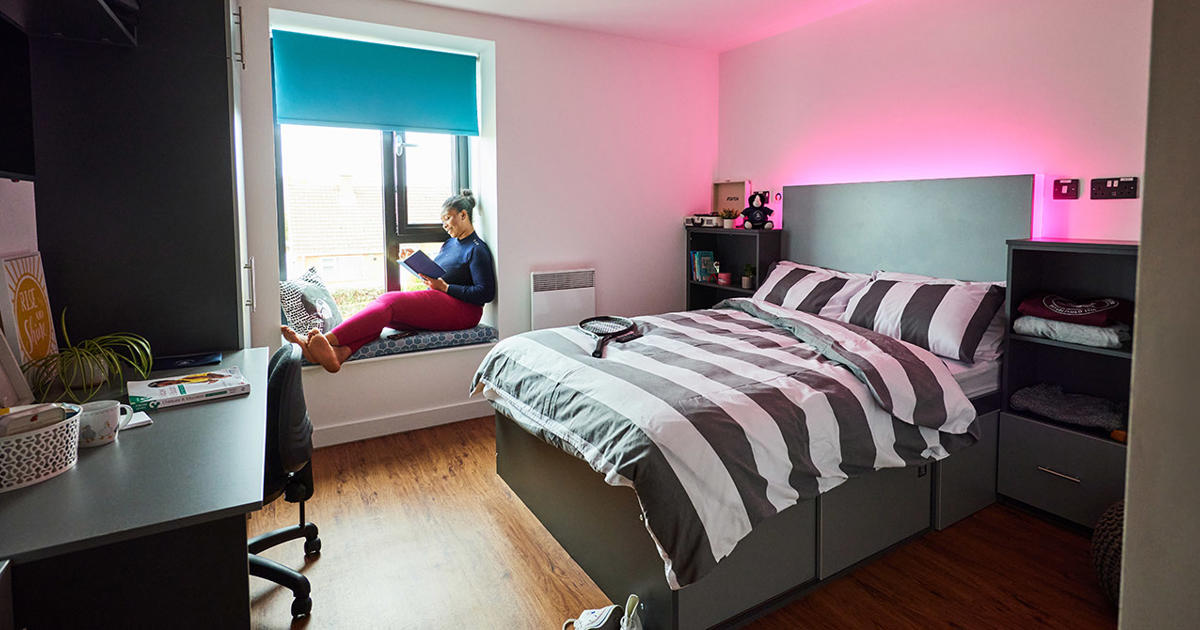
Benefit from our accommodation guarantee. We have rooms on campus to suit every budget including en-suite options.