We have an excellent reputation with schools in the region and have been training highly skilled, inspirational secondary teachers for over 75 years.
Joint 1st in the UK for Quality Education
We're rated 'Outstanding' for teacher training
University of the Year finalist
Recognised for our graduate success, we’re shortlisted for University of the Year in the Times Higher Education Awards 2025.
Overview
Our postgraduate certificate in education (PGCE) will prepare you to become an inspirational Physical Education teacher with varied school placements, interactive lesson simulations and tailored tutor support.
At Worcester, you’ll gain experience through placement in two different secondary school environments, teaching a range of secondary year groups, whilst receiving support from a subject mentor and University tutors. You can also attend additional placements teaching post-16 and SEND students.
When not on placement, you’ll be taught through a mixture of lectures, workshops and interactive subject sessions. In these interactive sessions, our tutors will model effective teaching for both the practical and theoretical aspects of being a Physical Education teacher. You can also select one of our enhancement activities, these allow you to pursue a subject that's important to you – from Special Educational Needs and Disabilities (SEND) to Technology Enhanced Learning.
Beyond the classroom, you'll enrich your sports portfolio. You can gain additional, accredited coaching qualifications, work towards teacher's awards and officiate or compete in competitions.
When you successfully complete the course, you'll be recommended for Qualified Teacher Status (QTS). QTS is awarded by the Teaching Regulation Agency in England.
Placements
You’ll complete a minimum of 120 days of placement, teaching physical education in two different schools, so you can experience a wide range of age groups and learning environments. There will also be additional school visit days where you can explore practical strategies for the classroom, with opportunities to practice, rehearse and then implement in school.
We have a strong relationship with over 100 partnership schools, where you will be supported by subject specialist mentors. School mentors are experienced teachers who we work with to make sure you get the highest quality, placement experience.
Regional Training Hubs
You can apply to study a PGCE directly with the University or with one of our partner Regional Training Hubs.
These Regional Training Hubs are networks of schools working together to train teachers. When you apply through a hub you will do a mix of training at their sites and at the University, and the hub will organise your placements within their network of schools.
"Trainees benefit from an exceptional learning experience at the University of Worcester. This experience instils in them a deep-rooted commitment to making a difference to the lives of the children and young adults in the communities they serve."
Course details
School experience is a substantial and integral part of the course, and you will have visit days and block placements in terms 1, 2 and 3.
The full-time course has 36 contact weeks in total. 24 weeks will be spent in partnership schools. In addition, up to 8 days will be spent in schools focusing on specific teaching skills.
Indicative themes explored through the course content are outlined below, although regular updates mean that exact modules may differ.
We regularly review our courses to reflect the latest research and developments in the subject area, as well as feedback from students, employers and the wider sector. As a result, modules may change to ensure the course remains current and relevant.
Optional modules will run if enough students choose to study them. It is not guaranteed that all modules will be offered every year.
Careers
This course will qualify you to teach in secondary schools across the UK. Most of our students quickly find jobs after graduation, thanks to the confidence they’ve gained on the course, the connections they make on placement and our excellent reputation with schools in the Midlands region.
Most of our graduates go on to work in Secondary schools as a teacher of Physical Education – but some others have found positions in Primary schools and Further Education settings.
Our graduates also pursue leadership roles within schools, as curriculum leaders, special educational needs coordinators, key stage leaders, deputies, or head teachers.
The PGCE is an internationally recognised teaching qualification and can widen your opportunities for a career overseas. You’ll be able to seek work in countries such as America, Australia, and Canada.
Student case studies
Some recent graduates reflect on their time on the course.

Tom Deehan
Having competed as a Professional Golfer and worked as a Sports Assistant in a school prior to starting my PGCE I thought I was already well equipped to become a teacher of Physical Education. Oh how I was wrong, I quickly learnt there was far more to teaching than having a wide understanding in a variety of sports.
The exceptional knowledge imparted on me by the phenomenal subject lecturers have given me the tools to successfully work in a variety of differing environments. The contrasting school placements allow you to find out what style of school might be right for your future employment while also learning from expert practitioners in real world scenarios.
I have thoroughly enjoyed my year at Worcester and would highly recommend it to anyone seriously thinking about a career in teaching. I look forward to becoming a subject mentor for the University should the opportunity arise.

Sophie Tandy
“I loved a lot about this course and we had really interesting placements. Our placements allowed me to develop consistency in my teaching and really target specific aspects of my work. We’ve had loads of different and varied assignments. I didn’t do a teaching undergraduate degree and this course has allowed me to widen my opportunities of what I want to do in the future. The facilities and support from tutors have also been fantastic.
I’m so pleased that I was able to pursue my dedication to my sport whilst studying, and I currently play Rugby for Gloucester Hartpury in the Allianz Premiership. I have previously played for England 7s.
I’ve recently got a job, starting in September, and will soon by a full-time teacher. I will continue with my sport alongside this.”

Alex Price
Being a part of the PE PGCE course here at Worcester has been one of the most enjoyable, challenging and fulfilling years and I wouldn’t have changed a thing! The course provided me with a great opportunity to experience two contrasting placements to challenge myself to adapt my communication, creativity and approaches to teaching to cater for different ways students learn.
The support and time provided by the Personal Academic Tutor team within PE throughout the course has been amazing. The PE tutor team made us all feel part of a community where the trainees create a real bond with each other to become the PGCE PE family.
In September I have secured a full-time job as a PE teacher at my first placement school and can’t wait to begin my teaching journey!

Ella Powell
“The amount of support I was given as a high-level sports person to balance both my PGCE and playing sport has been incredibly helpful. Although the course is challenging, it does make you a better teacher and a better all-round individual. I’ve learnt so much about myself as well as developing as a teacher.
In September I have a full-time permanent job secured which I will combine with playing High-Level Netball and International Netball. I currently play Superleague Netball at WASPS Netball and I’ve recently been selected for the Welsh International squad. The school I’m going to work in are really supportive in balancing this against my first ECT years with them.”

Emily Harris
“I feel very proud to be graduating. My time at University of Worcester has been crucial in shaping me, not only as a person, but as a teacher. The sense of community is a real asset and I can't imagine studying at a different institute for my PGCE.”
“The support that was offered in terms of securing a teaching post and during my NQT year is so appreciated. I do not know of another university that values and supports its alumni like the University of Worcester.”
Tom Deehan
Having competed as a Professional Golfer and worked as a Sports Assistant in a school prior to starting my PGCE I thought I was already well equipped to become a teacher of Physical Education. Oh how I was wrong, I quickly learnt there was far more to teaching than having a wide understanding in a variety of sports.
The exceptional knowledge imparted on me by the phenomenal subject lecturers have given me the tools to successfully work in a variety of differing environments. The contrasting school placements allow you to find out what style of school might be right for your future employment while also learning from expert practitioners in real world scenarios.
I have thoroughly enjoyed my year at Worcester and would highly recommend it to anyone seriously thinking about a career in teaching. I look forward to becoming a subject mentor for the University should the opportunity arise.
Sophie Tandy
“I loved a lot about this course and we had really interesting placements. Our placements allowed me to develop consistency in my teaching and really target specific aspects of my work. We’ve had loads of different and varied assignments. I didn’t do a teaching undergraduate degree and this course has allowed me to widen my opportunities of what I want to do in the future. The facilities and support from tutors have also been fantastic.
I’m so pleased that I was able to pursue my dedication to my sport whilst studying, and I currently play Rugby for Gloucester Hartpury in the Allianz Premiership. I have previously played for England 7s.
I’ve recently got a job, starting in September, and will soon by a full-time teacher. I will continue with my sport alongside this.”
Course highlights

Teaching and assessment
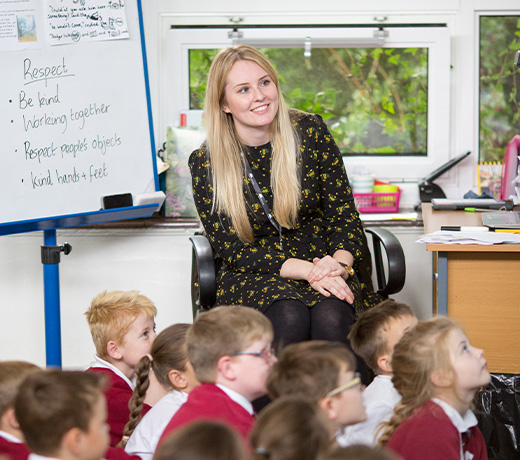
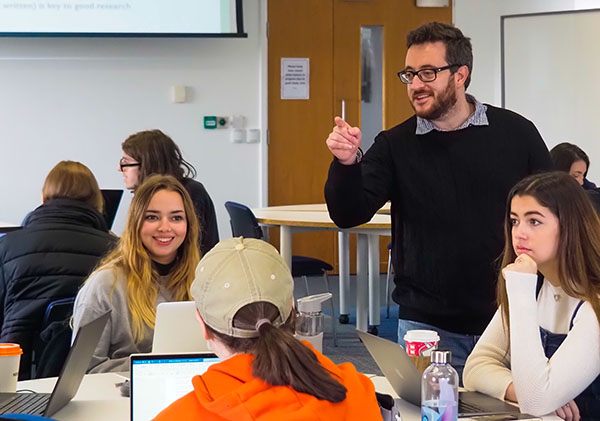
Teaching is a mix of interactive seminars, classroom simulations, and one-to-one tutorials. Alongside this, you’ll be supported by university staff and school mentors when out on placement. Your assessments will prepare you for a career as a teacher, and include creating a learning resource, delivering a presentation, and writing reflective essays.
Teaching and assessment contents
Teaching
You'll experience specialist subject training to develop the necessary knowledge and understanding of their subjects and related pedagogy, which will enable them to teach their subjects across the full age and ability range of training.
Schools and further education settings in the partnership play a crucial role in designing training that provides the range of experiences that students need. ‘The cream of the talent’ from within the partnership, alongside subject specialist tutors, provide taught experiences to give students a breadth of experience and provide them with opportunities to demonstrate all the Teachers’ Standards.
In addition, meetings with Personal Academic Tutors (university lead tutors) are scheduled throughout the course. Tutors and Regional Training Hub Leads also visit students in school to quality assure the process and offer tutorial support.
The majority of teaching sessions will be face to face. There will be elements, especially large cohort sessions, that may be delivered online.
Typically contact hours for the centre-based training will be structured around:
- Interactive small group seminars on campus
- Practical skills sessions on campus
- Scheduled online lecture/discussions.
In addition, you will be expected to engage in tutorials, online research, completing learning activities and accessing learning materials each week. This includes independent study preparing for assessments.
Meet the team
You will be taught by a teaching team whose expertise and knowledge are closely matched to the content of the modules on the course.
You can learn more about the staff by visiting our staff profiles.

Kim Hibbert-Mayne

David Woodward
Dave is a highly motivated and experienced teacher educator. He prides himself on the quality of his teaching and learning and is committed to delivering a curriculum that enables the trainee PE teachers to thrive. He is enthusiastic and passionate about ensuring that trainees experience the best possible learning experience, enabling them to reach their full potential on their PGCE PE journey.
Kim Hibbert-Mayne
David Woodward
Dave is a highly motivated and experienced teacher educator. He prides himself on the quality of his teaching and learning and is committed to delivering a curriculum that enables the trainee PE teachers to thrive. He is enthusiastic and passionate about ensuring that trainees experience the best possible learning experience, enabling them to reach their full potential on their PGCE PE journey.
Entry requirements
Honours degree, normally 2:2 or higher from a United Kingdom higher education institution or equivalent qualification, in a relevant subject area. Applicants with a 3rd class degree will be considered on an individual basis.
GCSE grade C/4 in English Language or English Literature and Mathematics, or equivalent qualifications. We do offer an equivalency test if you don’t have the required GCSE grade to apply for our courses.
Trainees who begin courses before providing evidence of the required GCSE standard (or equivalent) will not be eligible for financial incentives, such as bursaries or grants until they achieve the required standard.
Any questions?
If you have any questions about entry requirements, please call our Admissions Office on 01905 855111 or email admissions@worc.ac.uk.
Fees
Fees contents
UK students
The standard tuition fee for full time UK students enrolling on a PGCE in the academic year 2026/27 is £9,790 per year (subject to changes in the government tuition fee cap).
Tuition fees are reviewed annually and may increase each year for both new and continuing students.
For more details on course fees, please visit our course fees page.
International and EU students
The standard tuition fee for full time international and EU students enrolling on a PGCE in the academic year 2026/27 is £18,400 per year.
*Please note that for EU students who are not in receipt of a UK government bursary/scholarship package, the fee is £9,790 per year (subject to changes in the government tuition fee cap).
For more details on course fees, please visit our course fees page.
How to apply
How to apply contents
Applications for PGCE courses, both Primary and Secondary, should be made online through the government's Find Postgraduate Teacher Training website. The course code for Physical Education is X9C6.
Start your application
Apply PGCE Secondary Physical EducationRegional Training Hubs
You can also apply to study a University of Worcester PGCE with one of our partner Regional Training Hubs.
These hubs are networks of local schools working with us to deliver your PGCE close to where you live and teach, with training and placements organised through the hub alongside support from University of Worcester tutors. You can apply directly via the links below:
- Cleeve Training Hub (M487) - Gloucestershire
- Hereteach Alliance (2J7X) - Herefordshire
- North Worcestershire Teacher Training Hub (2XBJ) - Redditch, Kidderminster, Bromsgrove, Malvern
- Shires Teaching Alliance (2ZQD) - Herefordshire
- Stour Vale (28X6) - Dudley, Sandwell, Wolverhampton, South Staffs and Shropshire
- Woodrush Training Consortium (2ZPR) - Birmingham/Bromsgrove
For detailed information on how to apply for a PGCE visit Get Into Teaching.
Contact
If you have any questions, please get in touch. We're here to help you every step of the way.
David Woodward
Senior Lecturer in Secondary Physical Education, Subject lead for Secondary Physical Education, PAT lead for IOE
d.woodward@worc.ac.uk
Secondary PGCE Office
secondary@worc.ac.ukAdmissions Office
admissions@worc.ac.uk01905 855111More to explore
Open Days
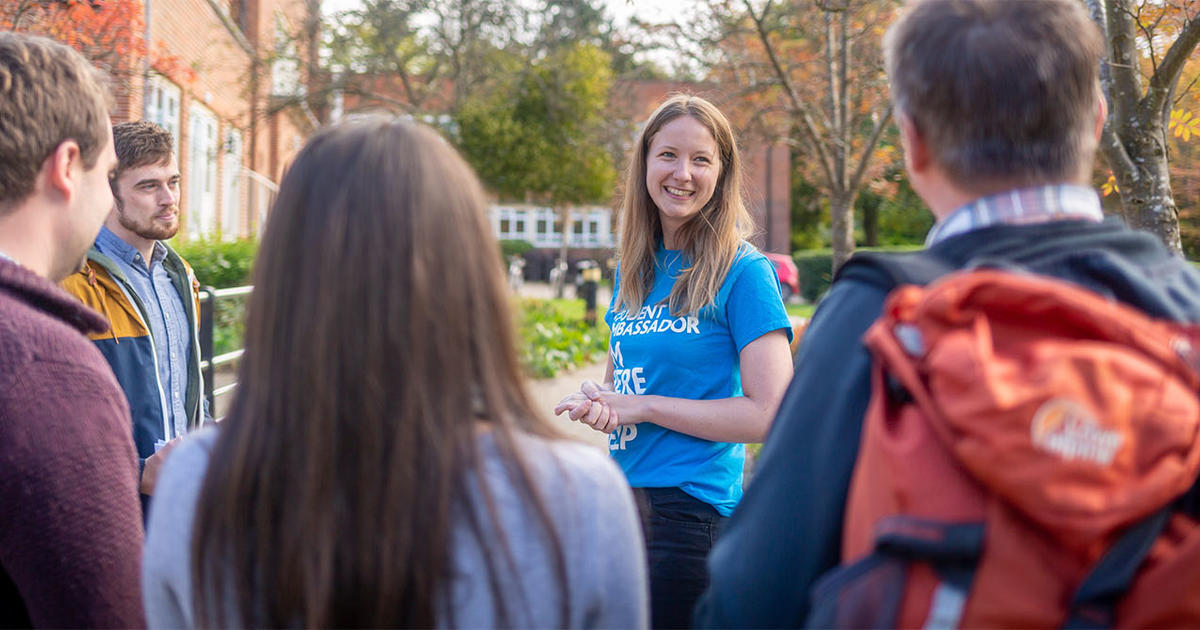
Visiting us is the best way to get a feel for student life at the University of Worcester.
The City of Worcester
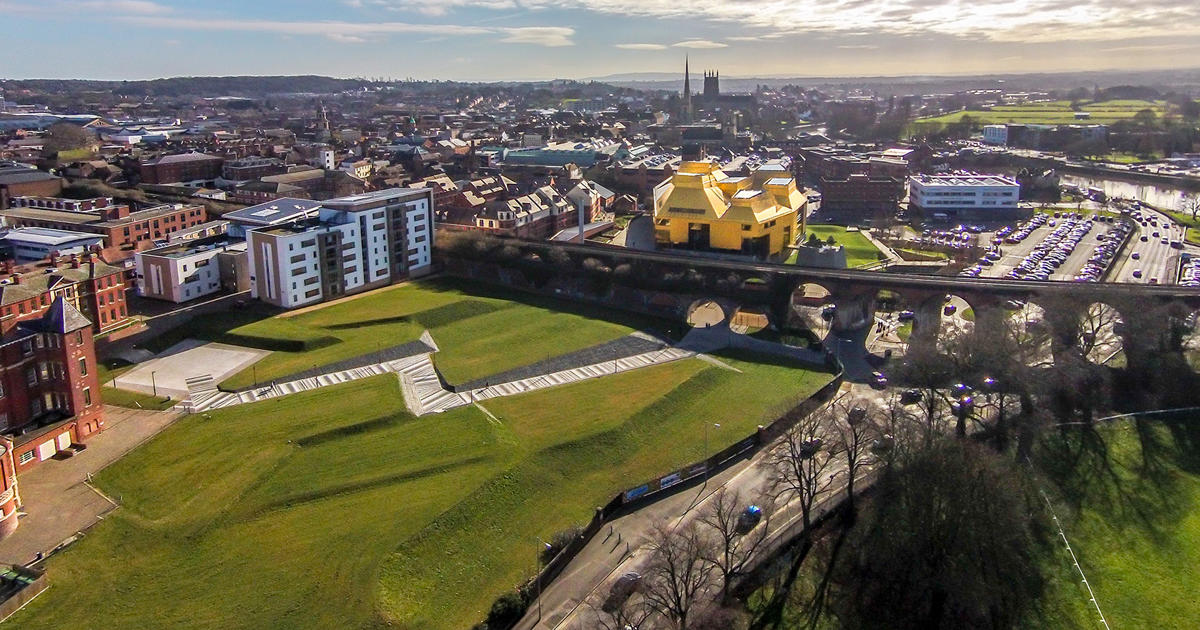
Worcester is a welcoming university city with great transport links and plenty of student parking.
Accommodation
Benefit from our accommodation guarantee. We have rooms on campus to suit every budget including en-suite options.